The item is in a remote warehouse, delivery time is 14-21 business days. More info
Delivery options - Select at checkout
Shipping @price - GLS
12,00
EUR
121,11
Incl. VAT 151,39
Total incl. delivery
166,39
The function requires that you are logged in. Create a user and use our smart list system to keep track of future purchases, regular purchases or wish lists. Create user Login

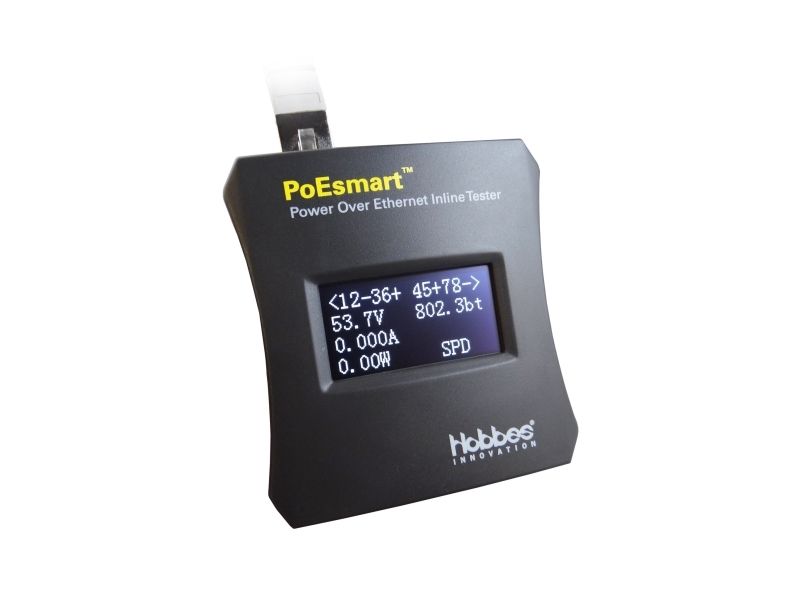
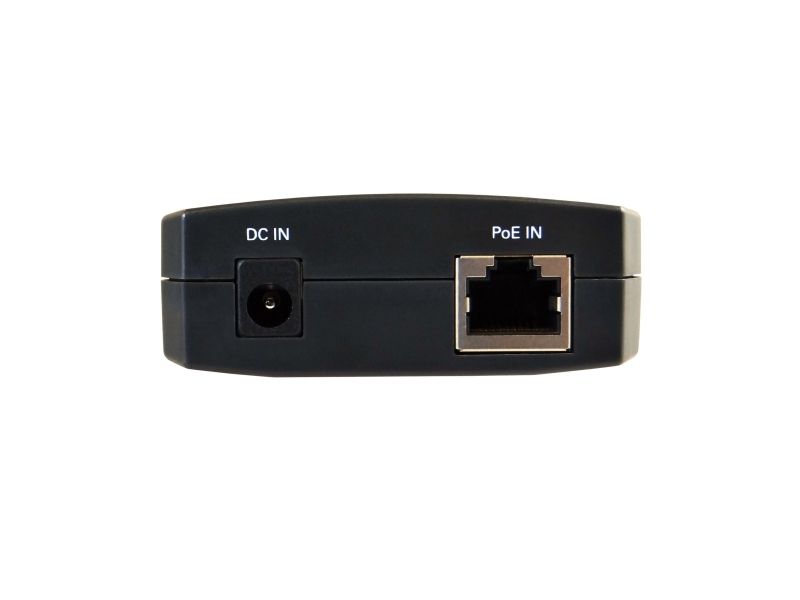
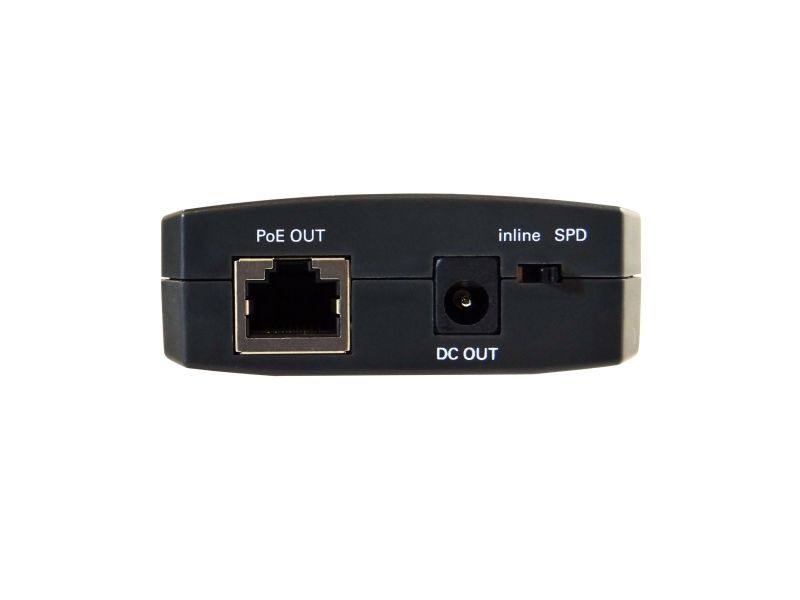
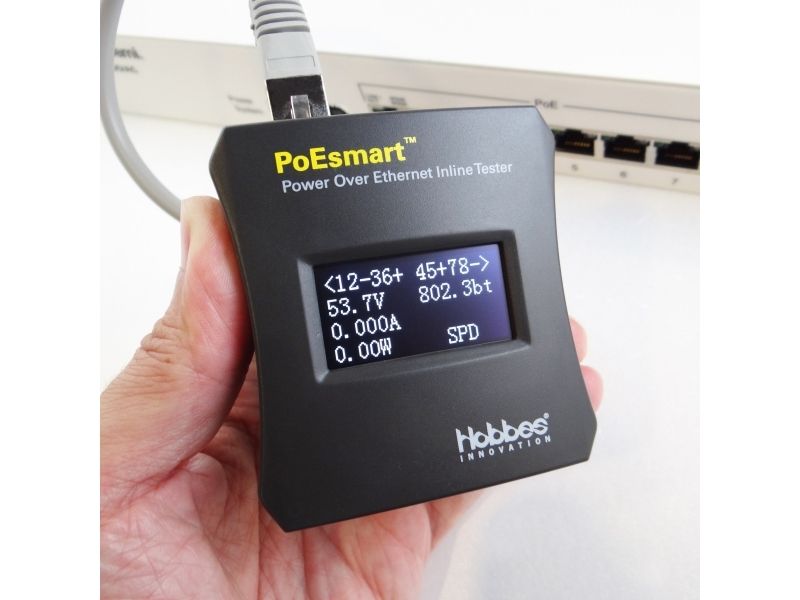
Poesmart is a PoE inline tester designed to support IEEE 802.3bt Power-over-Ethernet standard. It detects the existence and identifies both standard (active) and non-standard (passive) PoE systems. When connected to a passive PD, PoEsmart displays the voltage and polarity of the operating PoE data pair and spare pair. For active PoE systems, PoEsmart is designed with an internal power device simulator known as SPD (simulate power device) to perform a negotiation process with the PSE (power source equipment) to establish voltage, current, and power draw of IEEE 802.3af / 802.3at / UPoE / 802.3bt Type 3 (4PPoE) and 802.3bt Type 4 PoE standards.
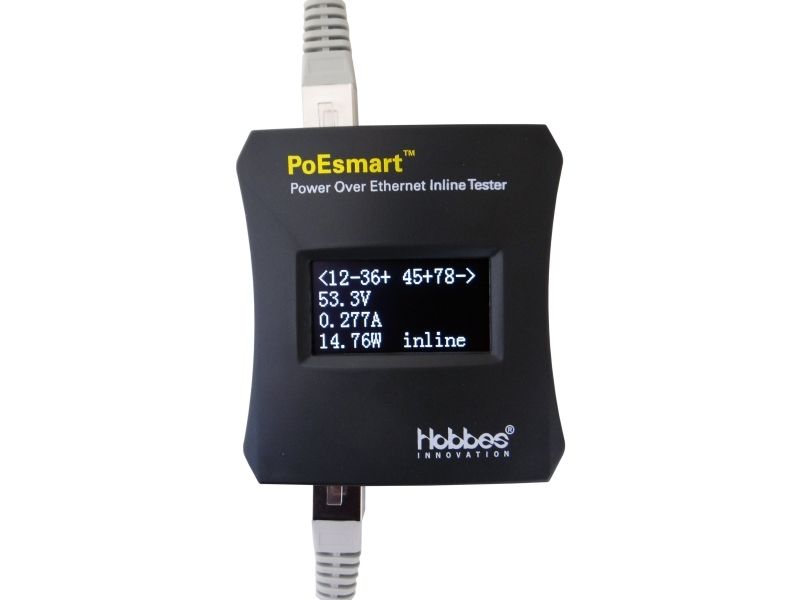
When linked with a PD and PSE, PoEsmart will actively analyze and monitor the voltage, current, polarity, and wattage supplied by PSE to PD without interrupting data flow. Results are shown on an OLED high-resolution display for an enhanced viewing quality and wider viewing angle suitable for various settings. With its extensive display, PoEsmart delivers a balanced layout for full visibility of the data to eliminate the inconvenience of scrolling or rotating for contents.
PoEsmart is the next generation of Power Over Ethernet Tester that is crucial when managing PoE systems.
Product type
PoE tester
Supported connectors
RJ-45
Built-in display
Yes
Test type
PoE testing
Display type
OLED
Product colour
Black
Networking standards
IEEE 802.3af, IEEE 802.3at, IEEE 802.3bt
The item is known under the following item numbers in our system
EAN:
7630049618879
SKU:
13.01.3280-6
Why do I find that the same product is available on different item numbers?
Manufacturers often release the same product with different item numbers, typically just different versions of the packaging. For example, the packaging may be targeted at different countries.
We try our best to unify the products, but it can happen that the same product appears on different item numbers in our system.