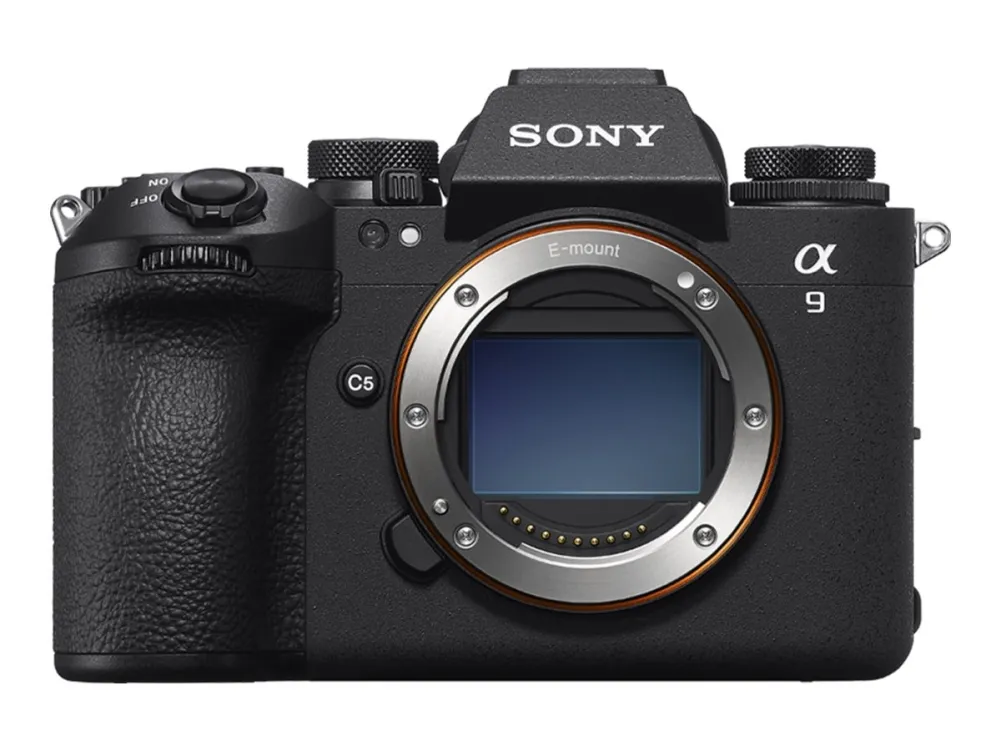
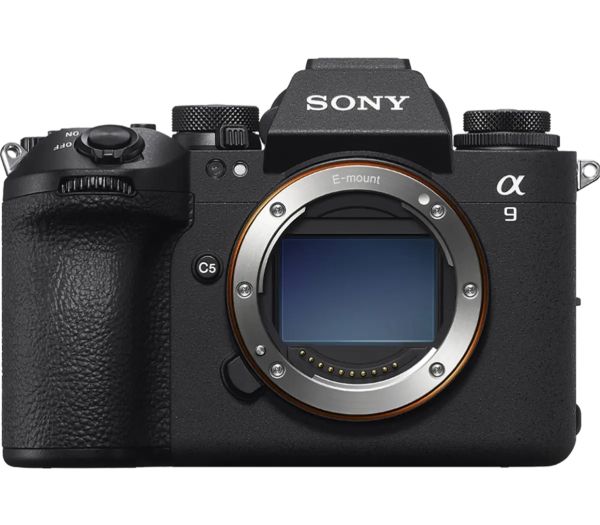
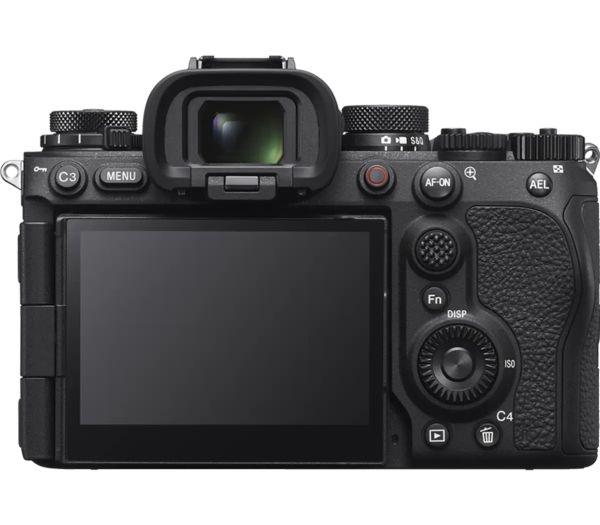
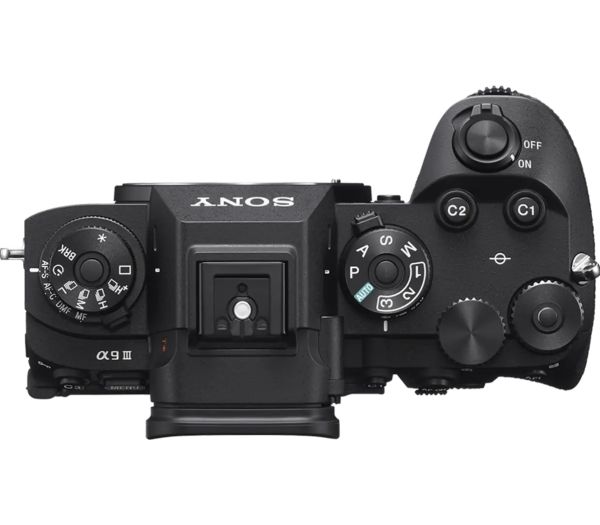
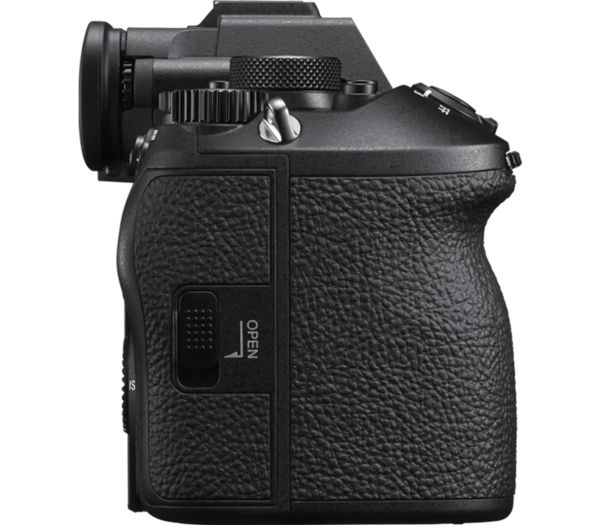
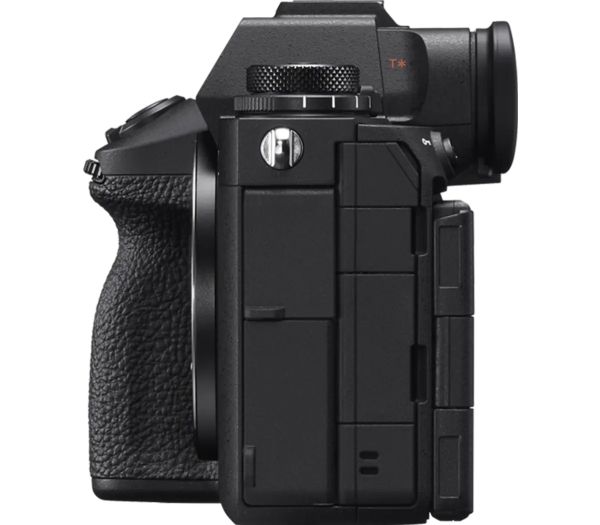
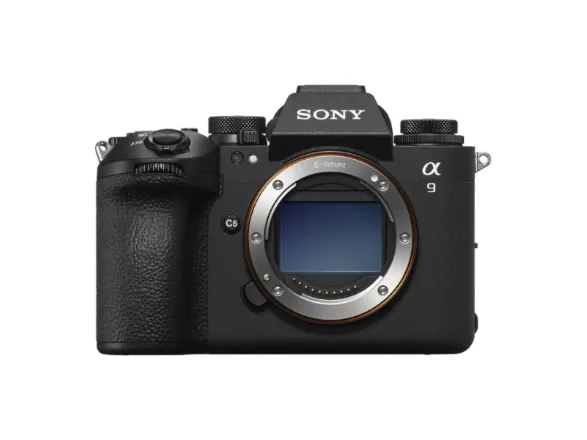
Sony a 9 III, 25.2 MP, 6000 x 4000 pixels, Exmor RS CMOS, 4K Ultra HD, Touchscreen, Black
FBAC4895-B52C-4E03-B099-A6A8F8B8017B Created with sketchtool. 706D6907-81E1-46A2-B8F9-7B702A1EF2C7 Created with sketchtool. 6A870209-E7F5-44F5-A66F-09E20C85A0DC Created with sketchtool. 0BB04D6C-A9AB-4913-BF4F-5A23954E68E1 Created with sketchtool. 501E26C7-66C1-4DAA-B740-6CFAF55A1B39 Created with sketchtool. C105F7D3-D5EE-43C9-9EE8-05CC42B296D4 Created with sketchtool. D94689D8-7CBB-41C8-AC06-F79D81FF82D5 Created with sketchtool. DA4C7ED9-2512-4D52-94F0-92800F2A6E04 Created with sketchtool. 42E133FD-828F-4CF4-A0BF-560014487A57 Created with sketchtool. F52D9745-4BFD-4506-BEEF-630FD09EF2D9 Created with sketchtool.
Remote stock (14-21 days)
The item is in a remote warehouse, delivery time is 14-21 business days. More info
Delivery options  - Select at checkout
Shipping @price - GLS
12,00
EUR 5.391,85
Incl. VAT 6.739,81
Total incl. delivery 6.754,81

Do you need a spare part for your camera?

Our configurator shows exactly the parts that fit ILCE9M3B.CEC - batteries, battery doors, grips, lens parts and much more.

Find spare parts for your model

  • Parts for this model in stock
  • Delivery 1-2 working days
  • Original and compatible parts
The power of one frame

A new movement
Featuring the world’s first1 full-frame image sensor with a global shutter system, the Alpha 9 III is a game changer, capturing fast-moving subjects with absolutely no image distortion and preserving split-second moments in stunning detail.

The next capture era starts now

The a9 III features the world’s first1 full-frame stacked 24.6 MP2 CMOS image sensor with a global shutter system. Unlike a rolling shutter sensor that records images sequentially from the top row of pixels to the bottom, the newly developed Exmor RS™ image sensor exposes and reads all pixels simultaneously so the camera can capture fast-moving subjects with absolutely no distortion. Combined with a maximum shutter speed of 1/80,000 second (1/16,000 second during continuous shooting)3, the a9 III is a game changer for professional photography.

Blackout-free 120 fps continuous shooting

The a9 III is defined by speed and accuracy, enabling it to capture decisive moments with ease. It’s capable of shooting continuous bursts at up to 120fps with full AF/AE tracking3, all without viewfinder blackout, and its highly advanced AI processing unit recognizes subjects with astonishingly high precision and reliability.

Preserve split-second moments

At 1/80,000 second4, the maximum shutter speed of the a9 III makes it easy to capture fast-moving subjects in almost any situation. What’s more, a compatible flash unit from Sony (such as the HVL-F60RM2 or HVL-F46RM)5 can synchronize at all shutter speeds, eliminating the steep, nonlinear drop-off in illumination that occurs with high-speed sync (HSS) and ensuring even illumination across the image.

Pure full-frame potential
Exmor RS image sensor with global shutter system
The new full-frame global shutter image sensor is equipped with 24.6 million effective pixels2, a stacked CMOS architecture and integral memory. This offers high resolution, overwhelming speed, and simultaneous full-pixel readout, so even fast-moving subjects can be captured distortion-free. The sensor’s stacked structure and advanced A/D conversion enable high-speed processing to proceed with minimal delay.

BIONZ XR™ image processing engine
With up to eight times6 more processing power than previous versions, the BIONZ XR image processing engine minimizes processing latency while markedly boosting image processing power. The high volume of data generated by the newly developed Exmor RS™ image sensor can be processed in real time even while shooting continuous bursts at up to 120fps3. This significantly improves image quality, from offering higher color gradation and more realistic color reproduction to reducing image noise. The camera can also capture high-quality 14-bit RAW images in all still shooting modes.

Composite RAW Shooting reduces noise
Composite RAW Shooting captures multiple images (4, 8, 16, or 32, selectable) which can then be merged using Sony’s Imaging Edge Desktop™ computer application software to create full-resolution images with very low noise.7 This makes it possible to shoot wildlife at high shutter speeds or portraits in low light, achieving exceptionally high image quality with low noise, even at higher ISO settings. What’s more, when shooting at low sensitivity levels, the a9 III can take advantage of camera shake that occurs during handheld shooting and use Composite RAW to create images with reduced false color and jaggies.

Advanced optical 5-axis image stabilization
Shoot handheld with confidence. The a9 III is packed with a high-precision image stabilization unit, advanced gyro sensors and optimized image stabilization algorithms to effectively detect and correct camera shake, offering 8.0-step8 stabilization. This is further supported by compatible lenses with built-in image stabilization9 and improved communication between the body and lenses, providing effective control for blur-free shooting even at telephoto focal lengths.

Blackout-free shooting
Enjoy an uninterrupted view through the blackout-free viewfinder, even during fast-paced continuous shooting—a game changer for shooting sports and other fast-moving subjects. What’s more, the distracting time lag that is usually associated with EVF viewing has been reduced to a minimum, so that fleeting moments can be captured with confidence.

Up to 120 AF/AE tracking calculations per second
Let the camera keep track—the high-speed readout of the new image sensor enables the a9 III to make up to 120 AF/AE tracking calculations per second10, twice that of its predecessor. AF tracks complex subject motions and predicts sudden movements with greater precision than ever before, while AE easily responds to sudden brightness variations. The a9 III continues to track even during continuous shooting, also contributing to greater precision.

Never miss a moment with Pre-Capture
Pre-Capture records the moments that occurred before the shutter was released. Settable from 0.005 to 1 second12, it’s available in any file format up to 120fps3 with full AF/AE tracking. This makes it easier to capture split-second moments, such as images of birds taking flight, even if actual shutter release is a little late.

Continuous Shooting Speed Boost
Continuous Shooting Speed Boost13 temporarily boosts the shooting speed while shooting bursts, ensuring you capture all the action. This is beneficial when shooting sports and other fast-paced activities when the timing of the key moment can be roughly predicted.

Real-time Recognition AF14
With its innovative AI processing unit, the a9 III can use subject form data to accurately recognize movement. Human pose estimation technology recognizes not just eyes but also body and head position with high precision. This makes it possible to lock onto and track a subject facing away from the camera or whose face is covered. A distant human subject that occupies only a small area of the frame (even smaller than in previous Real-time Recognition AF iterations) can be recognized if the subject is near the focus area when the shutter is half-pressed while shooting with continuous AF. This can speed up focus acquisition on an athlete approaching from a distance at a track-and-field or ski event, for example.

Reliable recognition of a wider range of subjects
The AI processing unit supports enhanced Human, Animal, Bird, Insect, Car/Train and Airplane14 recognition. In the Car/Train category, it is now capable of recognizing helmets, such as those worn by the drivers of formula race cars. Animal recognition can recognize the eyes of some grazing and small animals, in addition to the eyes, heads and bodies of dogs, cats and similarly featured animals. Bird recognition has also been updated, more easily pinpointing the eyes of a variety of bird types as well as recognizing bird bodies. Plus, a new Animal/Bird setting eliminates the need to switch between two settings to shoot animals or birds.

Wide, fast, precise autofocus and tracking
The a9 III now features 75915 phase-detection points in a high-density focal plane phase-detection AF system that covers approximately 95.6% of the image area. The large volume of data read from the image sensor is processed at high speed via the advanced BIONZ XR processing engine, while optimized algorithms ensure high accuracy and high density. This Fast Hybrid AF system combines the speed and tracking performance of phase-detection AF with the precision of contrast-detection AF, reliably locking onto and tracking subjects that move rapidly and/or erratically.

Match AF tracking response to subject movement
Whether the subject is moving, still or changing speed, AF tracking can keep track. Simply select a setting [Stable], [Standard], and [Responsive], depending on the speed of the subject and shooting scenario.

Customizable focus area
Keep what you need in focus, with XL and XS focus area spot sizes added to the line-up. XS can be useful when shooting wildlife and trying to avoid focusing on foreground branches, for example. You can also create a custom focus area of specified size and even vertical aspect ratio if necessary. For example, at a track event where the participants are lined up side-by-side, setting the AF frame to a custom horizontal format could make it easier to focus on the leading runner.

Shooting responsibly when using face registration
The face registration feature involves the use of biometric data. You are responsible for your collection and use of such data, and compliance with applicable local law. For more details, please visit the website below.

Flash sync at all shutter speeds
With a compatible flash unit from Sony (such as the HVL-F60RM2 or HVL-F46RM)5, the a9 III can perform full flash synchronization right up to the maximum 1/80,0004 second shutter speed. This allows flash to be used for extra subject illumination when shooting outdoors in bright daylight with a high shutter speed, reducing the need for large lighting setups and vastly expanding creative shooting possibilities.

Flicker-free shooting
The global-shutter image sensor exposes all pixels simultaneously, so flicker cannot occur within a single image, but may appear between frames. To reduce this type of flicker, Anti-flicker Shooting or Hi frequency flicker-free shooting (Var. Shutter) functions can be used.
(1) a9 III (2) Rolling shutter image sensor

Global shutter eliminates flash banding
The a9 III’s advanced image sensor is equipped with a global shutter system that exposes and reads out all pixels at once, eliminating exposure differences that can arise, for example, when shooting alongside press photographers covering an event. This eradicates the issue of “flash banding” that is common in cameras that use a rolling shutter system.

Full-quality, full-frame movies

4K distortion-free movies with high resolution and detail
Shoot 4K movies in either the full-frame or Super 35mm (approx. APS-C) formats. The a9 III captures 4K (3840 x 2160) movies at up to 120p, and at 60p with full pixel readout and 6K oversampling for dramatically reduced moiré and jaggies.

4K 120p without cropping for the first time in an a camera
For the first time in the a line-up from Sony, the a9 III offers 4K (3840 x 2160) 120p movie recording without cropping, allowing users to utilize the full angle of view provided by any lens. For example, 4K footage shot in slow motion 120p and footage shot at normal speed 24p within the same scene will have the same angle of view and can be easily edited together without the need for reframing.

S-Cinetone™ for a cinematic look
Sony’s S-Cinetone picture profile provides the same color science that delivers beautiful colors and skin tones throughout the highly regarded Cinema Line range. S-Cinetone produces natural mid-tones that are essential to healthy-looking skin, plus soft colors and gorgeous highlights. This lets creators concentrate on shooting while achieving a cinematic look without the need for color grading.

Breathing compensation for consistent angle of view when focusing
Focus breathing compensation effectively reduces focus breathing when shooting movies. Sony’s original Clear Image Zoom technology is used to automatically maintain a consistent angle of view throughout focus changes for more stable images.

Dynamic active Mode stabilization
A high-precision stabilization unit and gyro sensors built into the camera, plus optimized image stabilization algorithms, allow advanced electronic stabilization to work in conjunction with the camera’s 5-axis optical in-body image stabilization system in a Dynamic active Mode that improves stabilization by more than 30% over the existing Active Mode (approx.)20.

Auto Framing
Using AI-based subject recognition technology, the Auto Framing feature automatically crops the frame to keep the subject in a prominent position when shooting movies. Even when the camera is mounted on a tripod, for example, the framing is continually adjusted so that the recorded footage looks like the subject was being followed by an experienced camera operator.

Intuitive operation, high reliability

Uniquely flexible tilting monitor for enhanced shooting flexibility
The a9 III features a 4-axis multi-angle monitor that combines the utility of a conventional tilting monitor with side-opening vari-angle flexibility, allowing for unrestricted angle adjustment whether shooting vertically or horizontally. Slim, unobtrusive, robust22, the mechanism enables the monitor to be pulled away from the rear of the body and tilted upward by up to 98 °, downward by up to 40 °, and swung sideways by up to 180 °. The touch sensitive, 3.2 type LCD monitor is optimized for outdoor shooting, providing 2.1 million-dot resolution, a wide color gamut and ample brightness for clear, easy viewing.

New front Custom button
An update to the Sony’s a design, the a9 III comes with a custom button on the front for faster, easier operation while holding the grip. This makes it even more adaptable to different shooting styles and needs. For example, you can assign the Continuous Speed Shooting Boost function to the front button to allow instant speed boost when shooting bursts.

Excellent viewfinder specs and performance
The 9.44 million-dot (approx.) OLED viewfinder includes 0.90x23 magnification with a 41 ° FOV for a clear, wide view, and an updated structure that results in a 25 mm high eyepoint24. An original optical design minimizes aberration that can be distracting when looking around the viewfinder image, providing a more consistent viewing experience. Viewfinder and monitor lag time have also been reduced to allow more stable framing, especially during continuous shooting. The finder frame rate can be set to Standard (60fps), High (120fps), or Higher (240fps)25. The 240fps setting provides an extremely smooth viewfinder image with minimum motion blur when shooting moving subjects, and greatly reduces motion blur when panning or tilting.

Two CFexpress Type A compatible media slots
As well as UHS-I and UHS-II SD cards, the a9 III’s media slots support CFexpress Type A cards. These are ideally suited to high-speed continuous still shooting at up to 120fps3 and provide high write speeds that quickly clear the buffers of cameras that generate high volumes of still image and movie data. Users can also save data to different media slots according to file type, image size and image quality, streamlining workflow.

Optional VG-C5 Vertical Grip
The optional VG-C5 Vertical Grip provides outstanding comfort and operability for long shooting sessions. The grip and shutter button feature the same ergonomic design as the camera body. Control access is similar too, with an independent front custom button (C5), a front dial, rear L and R dials, and a lock function on the R dial. The VG-C5 Vertical Grip can house two NP-FZ100 batteries for extended shooting sessions.

Rugged reliability for challenging environments
The a9 III features outstanding dust and moisture resistance, thanks to design refinements with silicone rubber packing around buttons, lens-lock button, cushioning around the lens mount, and other areas. An improved EVF design effectively seals the viewfinder’s optical path, achieving the same effect as a double glass structure. Combined with dust and moisture resistant lenses, flash units, and the optional VG-C5 Vertical Grip, the a9 III becomes the core of a rugged dust and moisture resistant system.26

Robust and durable
With lightweight, high-rigidity magnesium alloy for its top cover, front cover, internal frame, and rear cover, the a9 III boasts high body durability, high shock resistance and effective heat dissipation. It’s built to withstand challenging professional environments while remaining relatively compact and lightweight.

Shading curtain closed on power-off
A shading curtain protects the image sensor from dust and particles while changing lenses. When set to ON, it automatically closes when the camera’s power is turned off.

Ergonomic grip design
The a9 III features a grip with a new shape that improves hold and reduces physical stress on the user, even when shooting with heavy telephoto lenses or for long periods of time. An ergonomically refined contour ensures that the grip fills the user’s hand for a secure hold that does not cause fatigue.

Streamlined workflow

Improved group display
Workflow efficiency gets a drastic boost thanks to image groups. Images taken at up to 120fps3 in continuous bursts can be defined as “groups,” making it easier to locate a specific image within a large group of images. These groups can also be assigned a rating, which can then be used for filtering and searching, and are retained after the images are imported into a computer editing application27.

Built-in Wi-Fi for FTP and smartphone transfers plus PC Remote tethering
Built-in Wi-Fi (IEEE 802.11ac) with 2x2 MIMO support allows high-speed data transfer, enabling the a9 III to transfer data up to twice as fast as its predecessor. 5 GHz28 communication offers maximum speed and stability, essential for news and sports shooters who need to deliver immediately, as well as for studio environments. The simple in-camera interface makes it easy to transfer still and movie data via an FTP server, Wi-Fi, fast-wired LAN, or USB tethering with a smartphone.

Clearer voice memo recording
Add clear voice memo metadata to still images through a dedicated voice memo microphone that’s built into the camera’s rear panel, close to the user’s mouth for better recording quality. Voice memos can be transferred to an FTP server along with the corresponding images, allowing the photographer to communicate effectively to the editor. The photographer can also use the Transfer & Tagging (Ver. 1.9 or later) mobile application to convert the voice memos to text29.

Multiple IPTC presets
IPTC (International Press Telecommunications Council) metadata can be added to still images, with the a9 III capable of internally storing up to 20 presets that can then be quickly selected when needed. This can be extremely useful at multi-sports events, for example, where different IPTC information is required for different competitions.

Shooting for a better future

Sony’s goal: zero environmental footprint
The Sony Group “Road to Zero” project aims to achieve a zero environmental footprint. To achieve that goal, we continue to refine every stage of our camera and accessory manufacture and distribution cycle to minimize environmental stress, from development through production to packaging and transport.