The item is in a remote warehouse, delivery time is 5-7 business days. More info
Delivery options - Select at checkout
Shipping @price - GLS
12,00
EUR
172,02
Incl. VAT 215,03
Total incl. delivery
230,03
The function requires that you are logged in. Create a user and use our smart list system to keep track of future purchases, regular purchases or wish lists. Create user Login

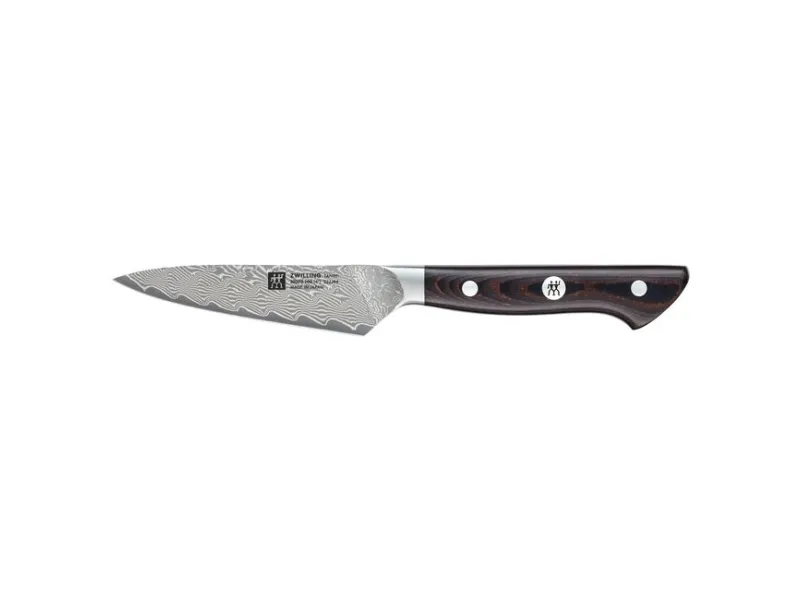
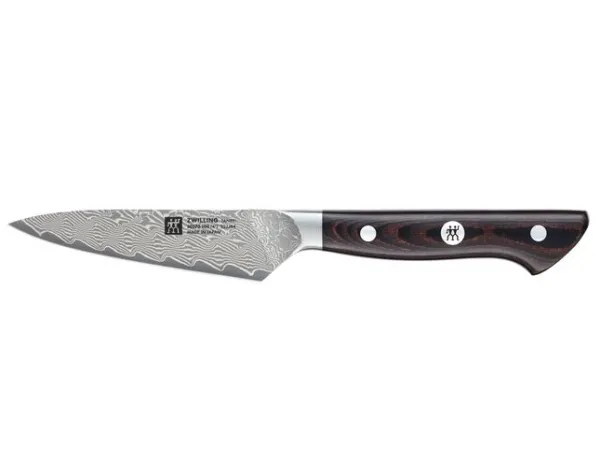
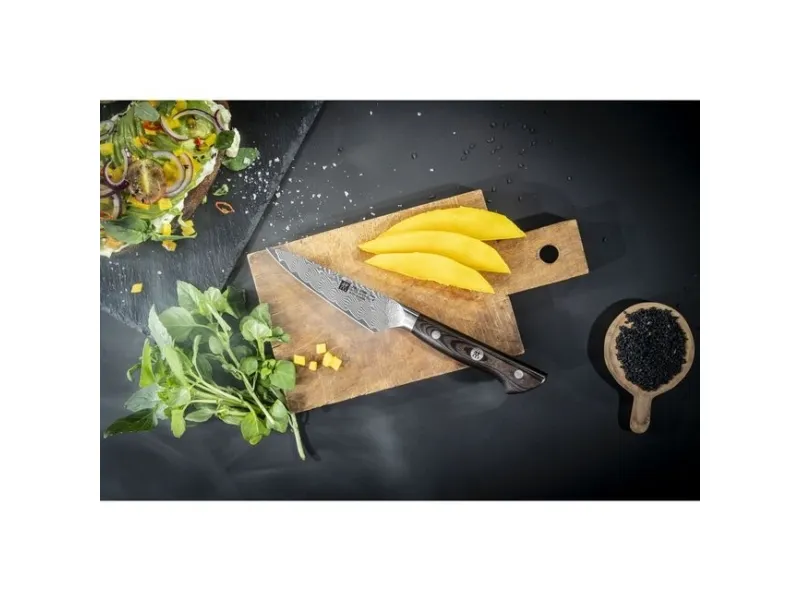
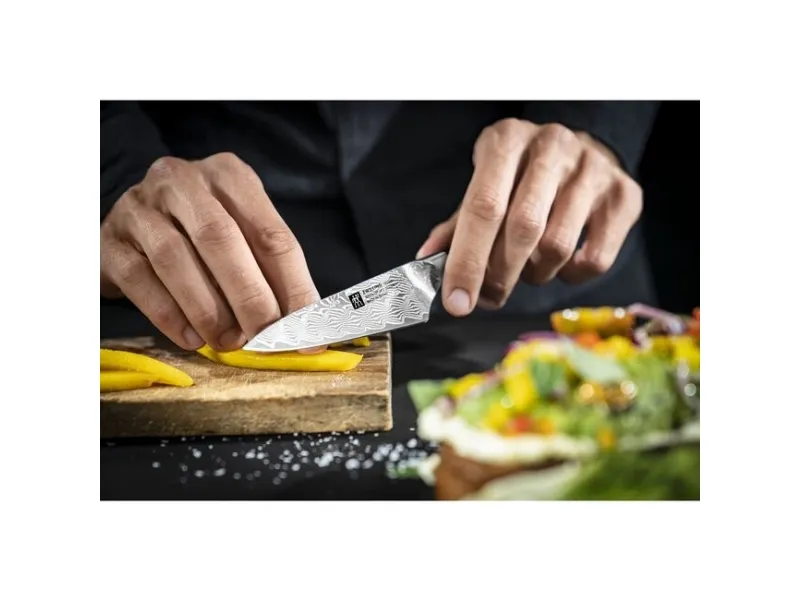
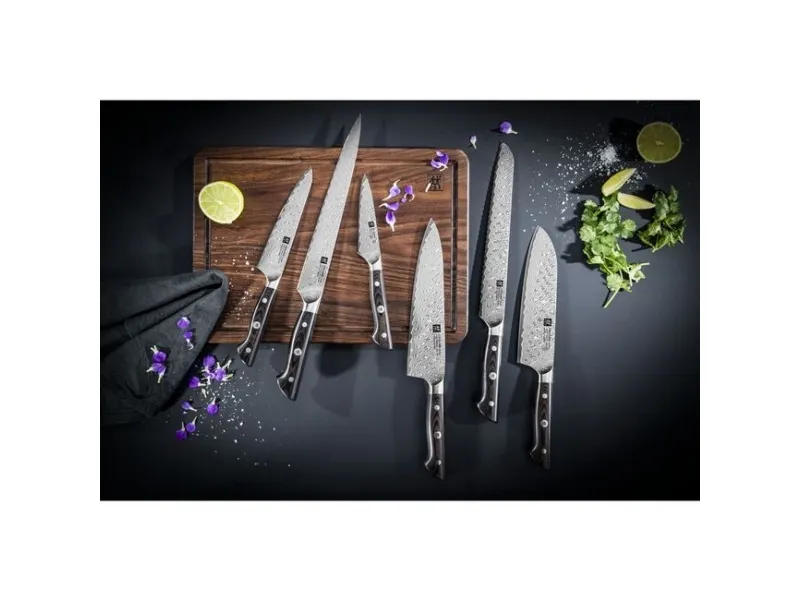
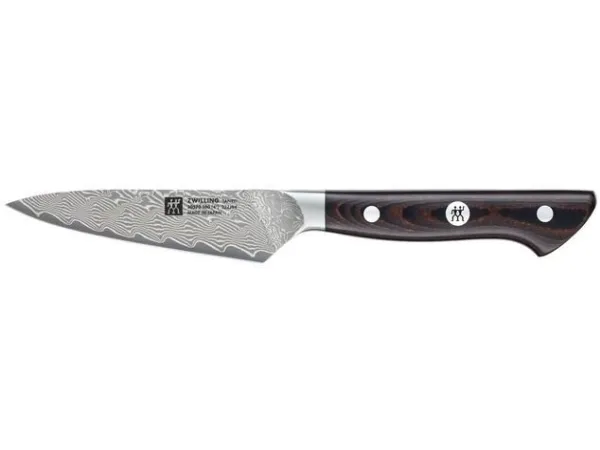
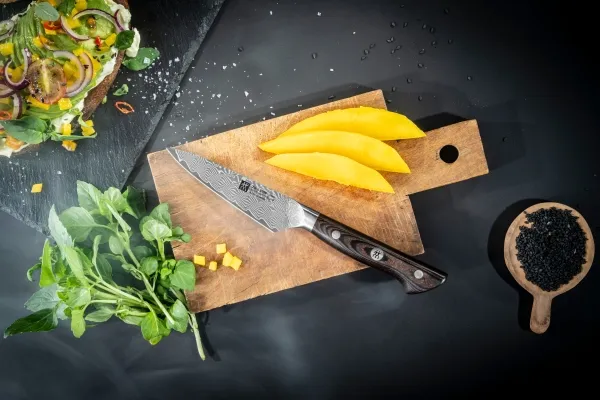
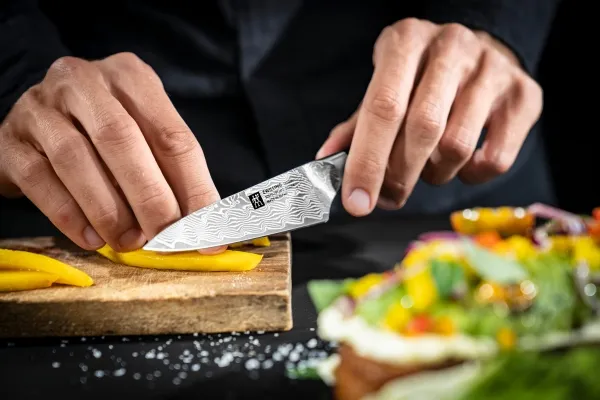
The TANREI Paring knife from ZWILLING opens up a whole new dimension of peeling, cutting and paring. That’s because it brings together Japanese craftsmanship and the German art of engineering in a blade just 10cm long, creating a cutting tool that is unparalleled in terms of its hardness and sharpness as well as in its unique damask design.
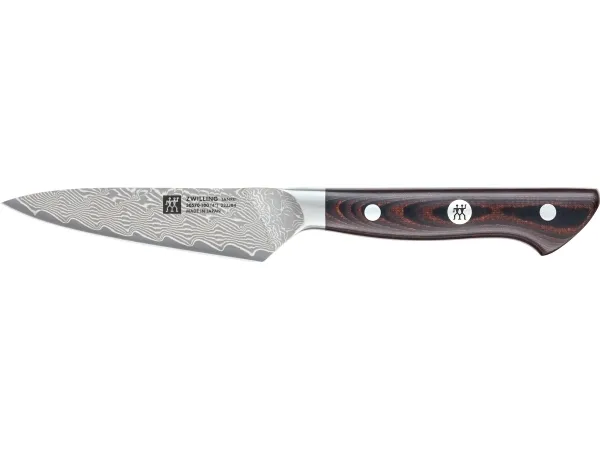
Each TANREI Paring knife has its own blade pattern. A damask design runs continuously from the tip to the handle joint. Each knife was made in dozens of hand movements and over many hours of work in Japan according to traditional craftsmanship to create its outstanding properties. The Japanese knife not only looks exceptionally good thanks to its damask pattern – it’s what’s on the inside that counts too: 63 HRC represents a particularly high degree of hardness, and one rarely achieved by a kitchen knife. 100 layers of premium steel and an FC 63 core combine to create the 10cm long, ultra-hard yet flexible blade. The final touch is a triple-riveted, rounded handle with a high-quality elegant micarta scales.
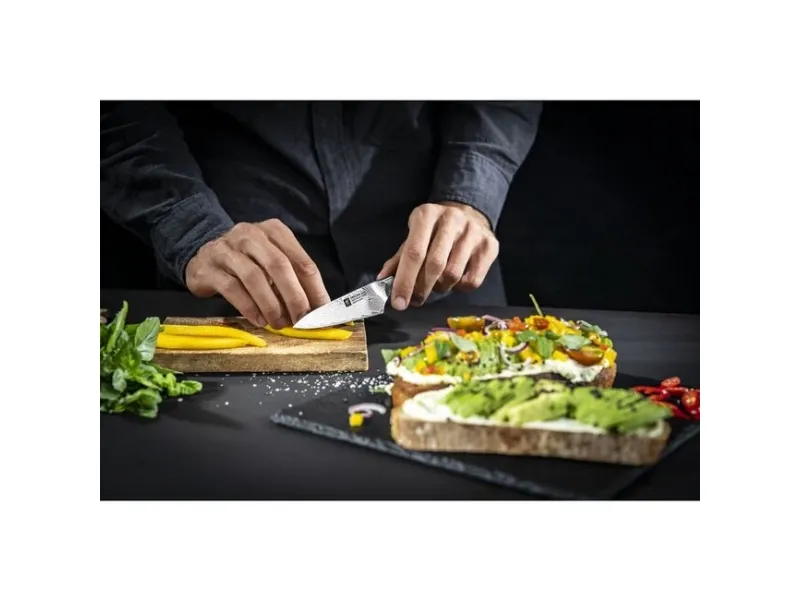
So you can peel fruits and vegetables with a truly premium knife. A knife sharpened in Japan by master craftsmen for a quality that will take your sophisticated cuisine to an even higher level.
Knife type
Paring knife
Blade length
10 cm
Blade material
Steel
Blade colour
Stainless steel
Handle colour
Brown
Weight
120 g
Number of products included
1 pc(s)
The item is known under the following item numbers in our system
EAN:
4009839665721
SKU:
30570-101-0
SKU:
ZWI-1026050
Why do I find that the same product is available on different item numbers?
Manufacturers often release the same product with different item numbers, typically just different versions of the packaging. For example, the packaging may be targeted at different countries.
We try our best to unify the products, but it can happen that the same product appears on different item numbers in our system.