The item is in a remote warehouse, delivery time is 5-7 business days. More info
Delivery options- Click an option to choose
Shipping @price - GLS
12,00
EUR
82,50
Incl. VAT 103,13
Total incl. delivery
118,13
Add to list
The function requires that you are logged in. Create a user and use our smart list system to keep track of future purchases, regular purchases or wish lists.

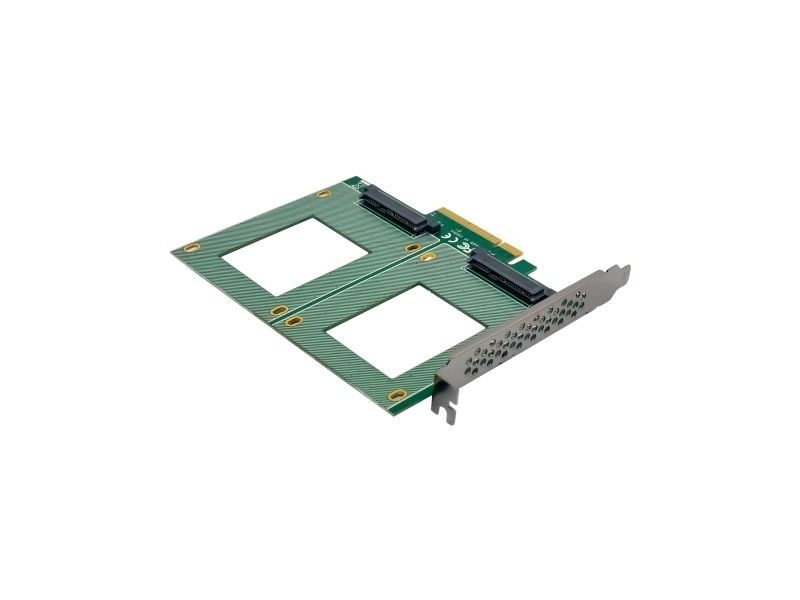
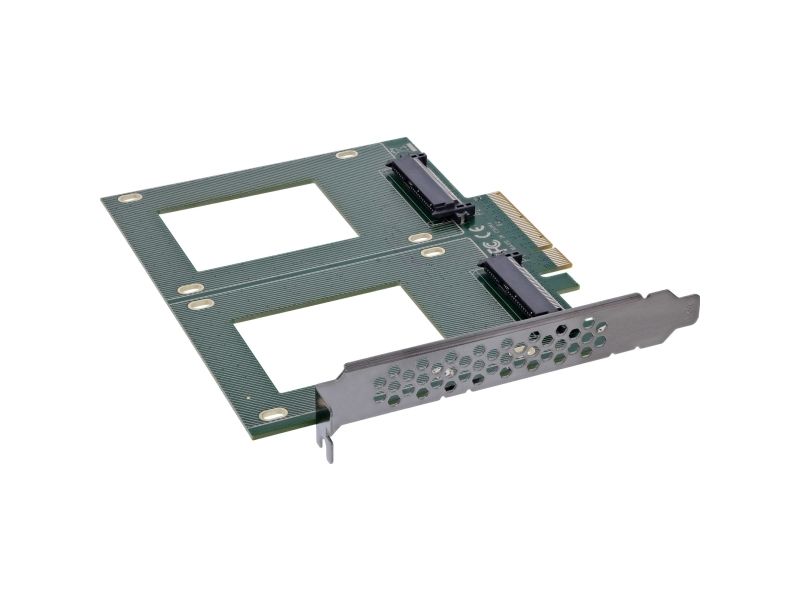
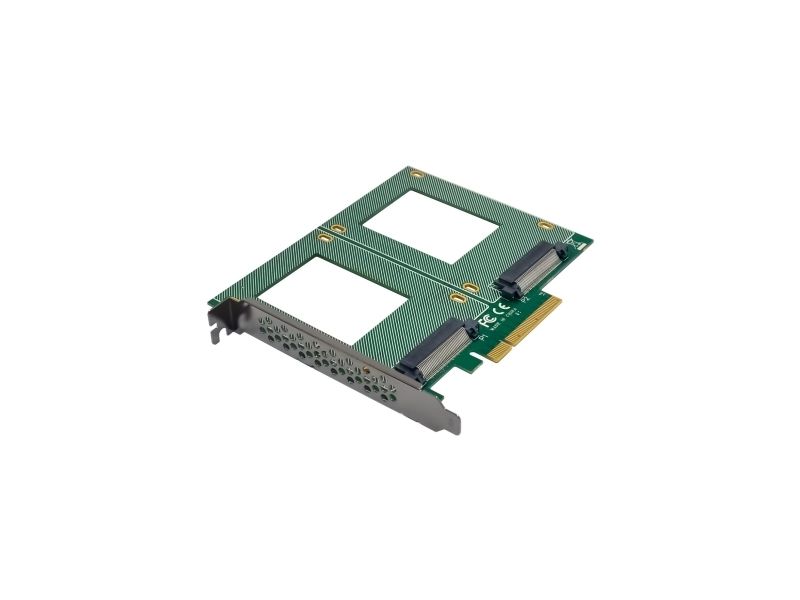
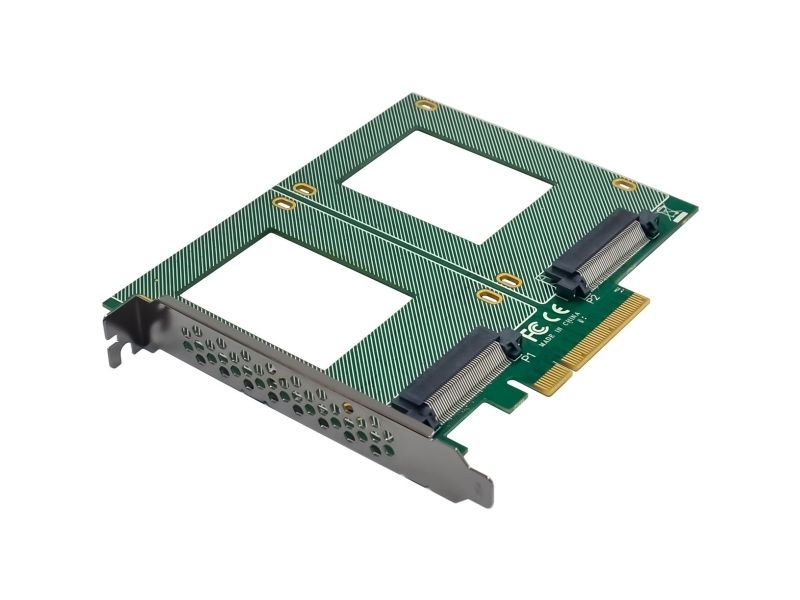
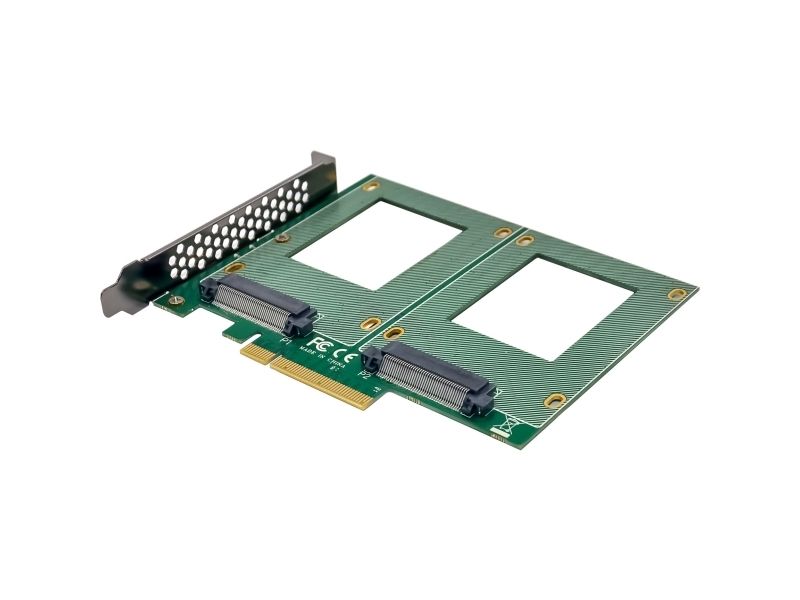
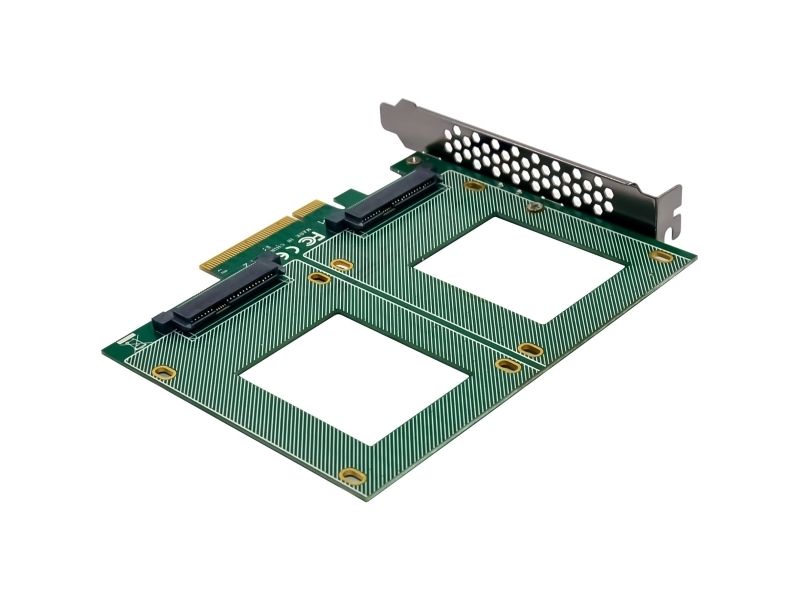
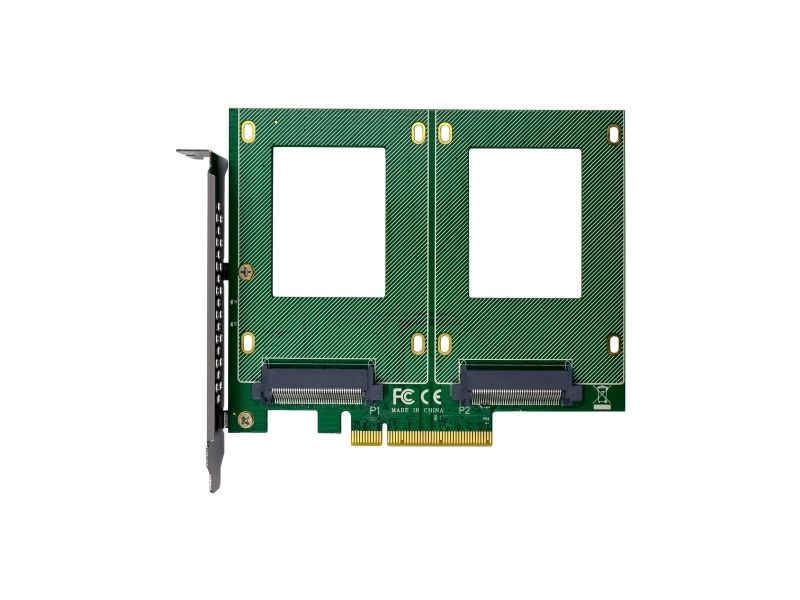
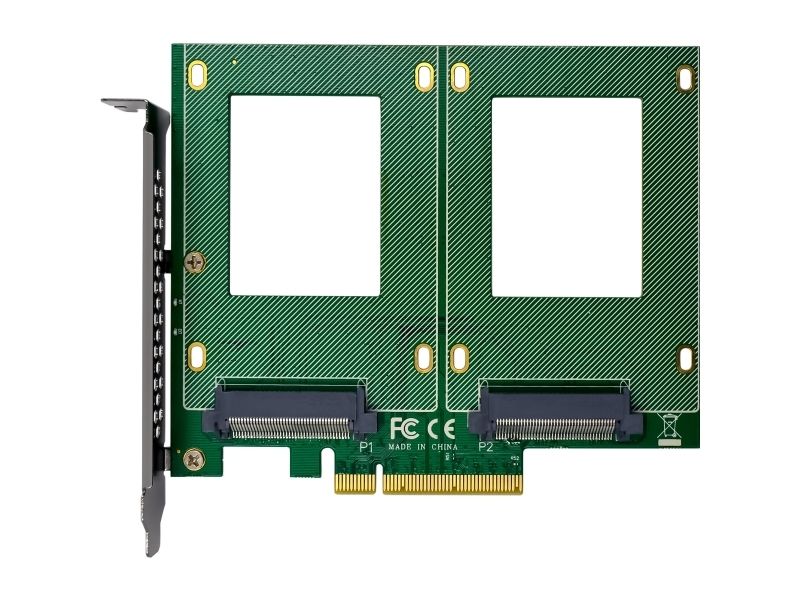
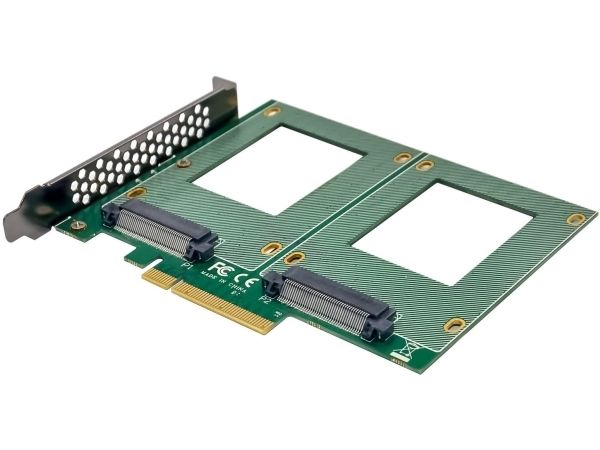
Supports two 2.5-inch NVMe SSDsfor maximum performance and flexibility PCIe 3.0 x8 connectionwith up to 64 Gb/s bandwidth Automatic lane detection (bifurcation)for optimum system integration LED indicatorsfor easy fault diagnosis and operating status No additional driver required- native Windows and Linux support
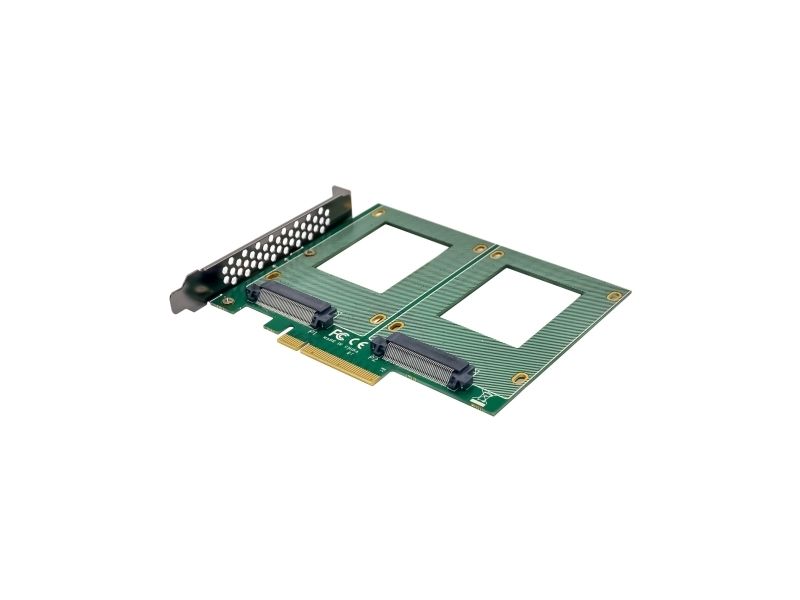
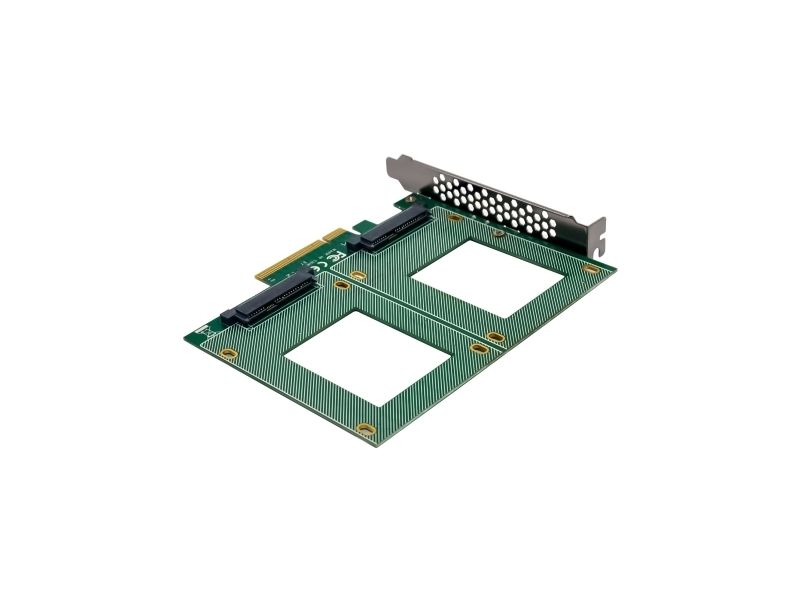
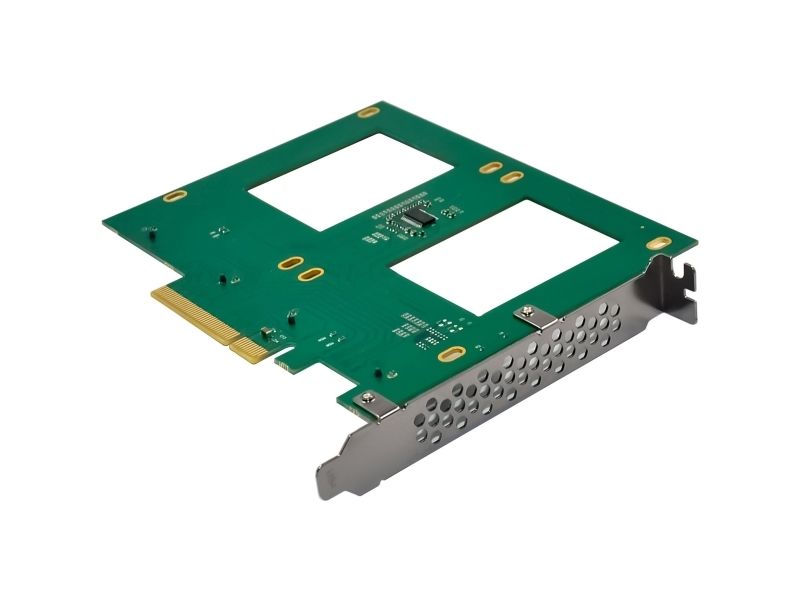
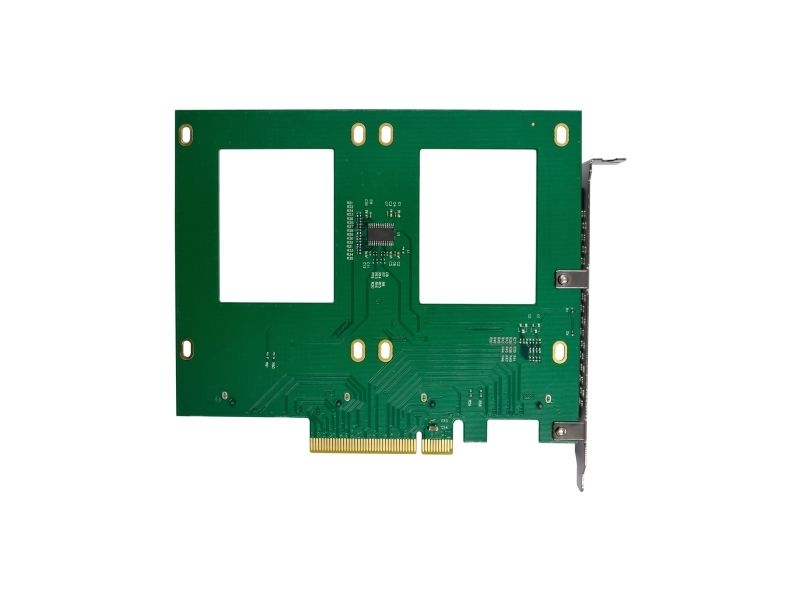
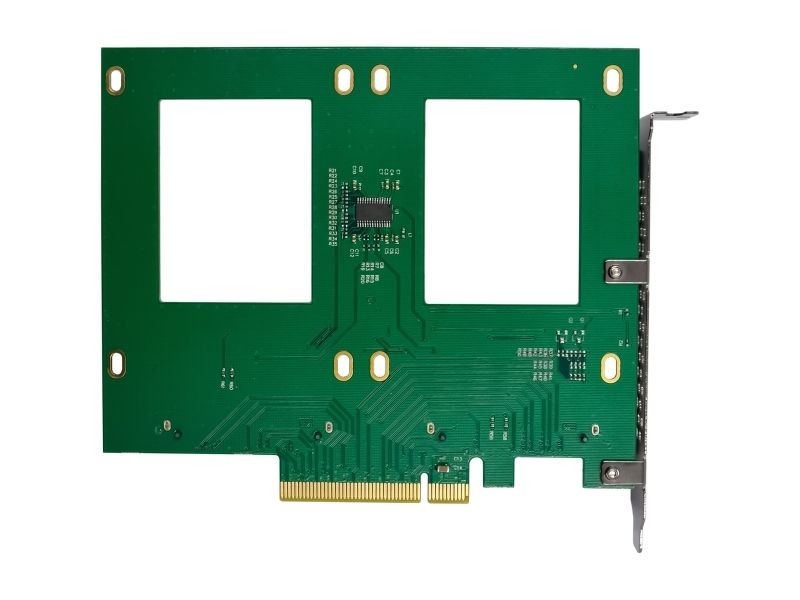
The InLine® PCI Express cardexpands your system with two internal U.2 NVMe SSD slotsand enables the parallel operation of two SSDswith full PCIe bandwidth. Thanks to automatic lane detection, configuration is carried out for optimum system integration. With a PCIe 3.0 x8 interface, the card offers a maximum bandwidth of up to 64 Gb/s, with each U.2 port supporting a data rate of up to 4 GB/s. LED indicators for read and write activitymake it easy to monitor the operating status. Note on dimensions: The card has a length of 143 mmand a width of 122 mm. Please check that your housing offers sufficient space for installation and that adequate ventilation is ensured. Technical data:
Bus type & PCIe: PCIe 3.0 (8 GT/s) x8 lanes (offers up to 64 Gb/s bandwidth) Connector interfaces: 2 x SFF-8639 connectors (for the installation of 2.5-inch NVMe SSDs) Chipset: PI6C20400BLE Compatible U.2 devices: Supports 2.5-inch NVMe SSDs according to SFF-8639 standard Data rate: Each port supports transfer rates of up to 4 GB/s Dimensions: 143 mm x 122 mm (PCIe board)
Operating conditions:
Operating temperature: -40 °C to +85 °C
Functions:
Automatic detection of the lane configuration during boot Onboard LED indicators (2x read/write activity LEDs) The U.2 SSDs obtain their power supply directly via the PCIe bus (3.3 V) No additional driver required
System requirements:Hardware:
PC with one free PCIe 3.0 x8 (or x16 slot) Motherboard that supports PCIe bifurcation
BIOS/UEFI settings for PCIe bifurcation: In order for both U.2 NVMe SSDs to be operated simultaneously, the PCIe slot used must often be set to Bifurcation modein the BIOS/UEFI. This splits the available PCIe lanes into several channels (e.g. one x8 slot into two x4 channels). The exact designation varies depending on the motherboard manufacturer and BIOS/UEFI version. Terms such as "PCIe Bifurcation", "Lane Splitting"or "PCIe Slot Configuration"may be used. Please consult your mainboard manual for the correct setting and then check whether both NVMe SSDs are recognized. Operating system support:
Windows: 11, 10, 8, 7 Windows Server: 2012 R2 Linux: Native support (Fedora, SUSE, Ubuntu, Red Hat)
Scope of delivery:
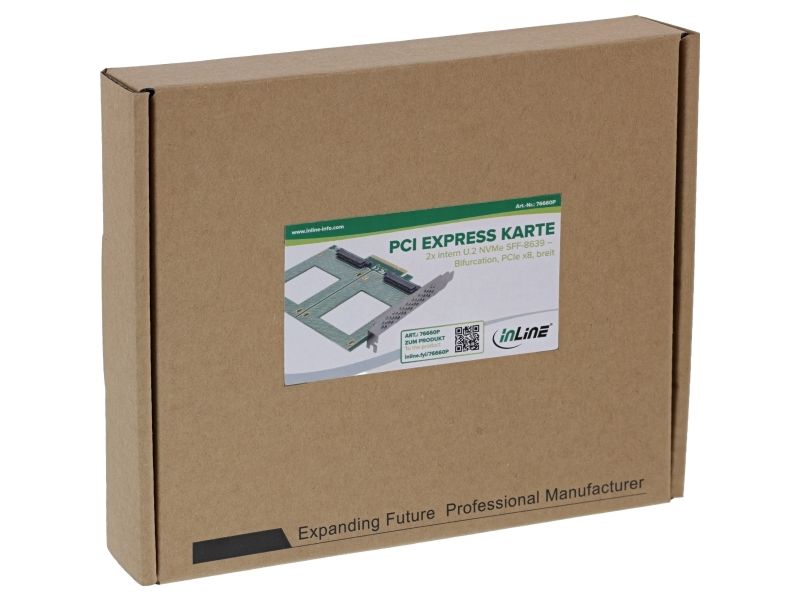
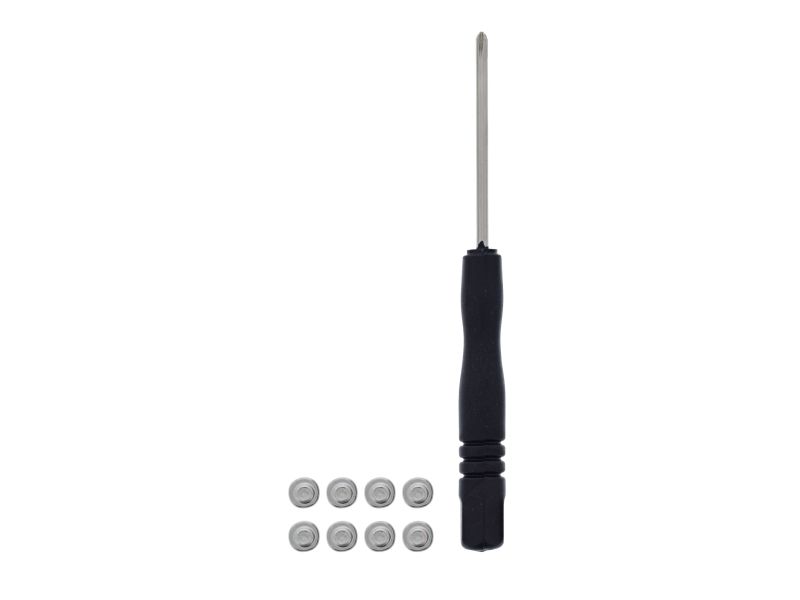
1 x InLine® PCI Express card to 2x internal U.2 NVMe SFF-8639 1 x hand screwdriver 8 x screws 1 x instruction manual (German/English) Operating temperature: 0° C – 55° C Storage temperature: -40° C – 70° C Humidity: 10% - 90% non-condensing
Host interface
PCIe
Output interface
U.2
Host interface gender
Male
Expansion card standard
PCIe 3.0
NVMe
Yes
Internal
Yes
LED indicators
Yes
Country of origin
Taiwan
Data transfer rate (max)
4 Gbit/s
Bandwidth
64 Gbit/s
Power supply input voltage
3.3 V
Operating temperature (T-T)
40 - 85 °C
Windows operating systems supported
Windows 10, Windows 11, Windows 7, Windows 8
Linux operating systems supported
Yes
Server operating systems supported
Windows Server 2012 R2
Compliance certificates
TÜV mark, Federal Communications Commission (FCC), CE
Width
160 mm
Depth
1.25 mm
Height
138 mm
Weight
2.2 kg
Manual
Yes
Package width
182 mm
Package depth
30 mm
Package height
155 mm
Package weight
62 g
Package type
Box
Dimensions (WxDxH)
160 x 1.25 x 138 mm
The item is known under the following item numbers in our system
SKU:
4043718341535
EAN:
4043718341535
SKU:
76660P
Why do I find that the same product is available on different item numbers?
Manufacturers often release the same product with different item numbers, typically just different versions of the packaging. For example, the packaging may be targeted at different countries.
We try our best to unify the products, but it can happen that the same product appears on different item numbers in our system.