Brug funktionen ”Giv mig besked..." herunder for opdateringer.
Delivery options - Select at checkout
Shipping @price - GLS
12,00
EUR
12,86
Incl. VAT 16,08
Total incl. delivery
31,08
Notify me when the item is in stock again
Email:
Stock agent created. We will send an email when the item is in stock again.
The function requires that you are logged in. Create a user and use our smart list system to keep track of future purchases, regular purchases or wish lists. Create user Login

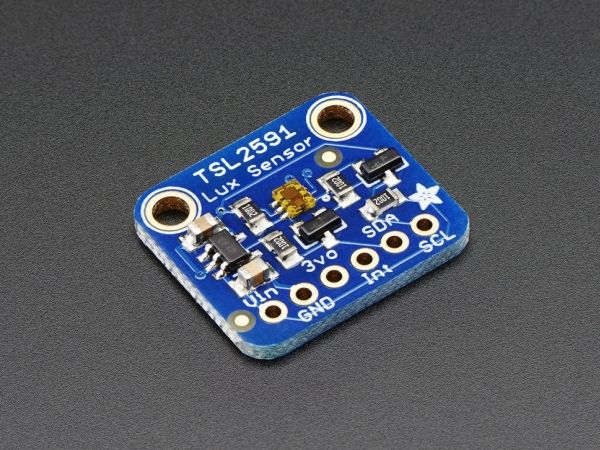
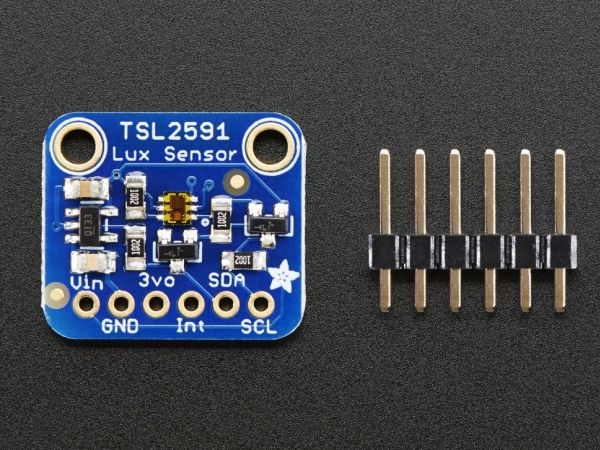
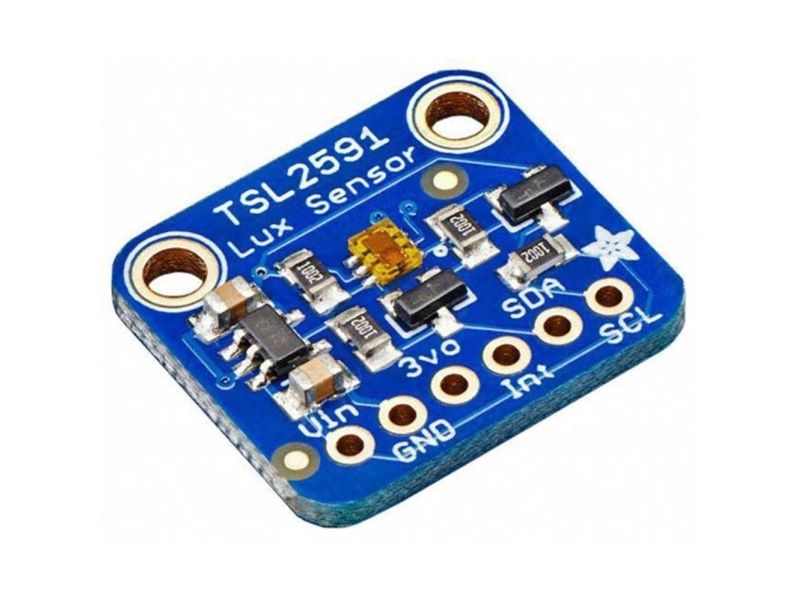
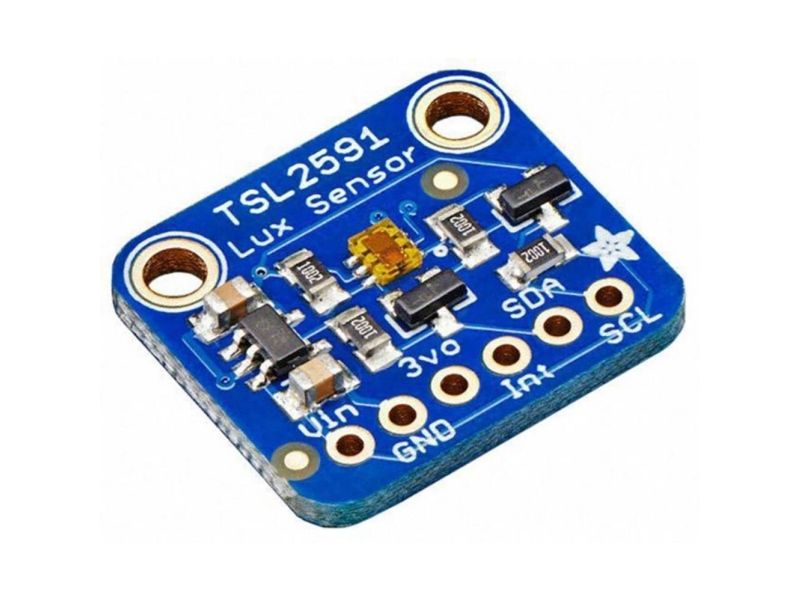
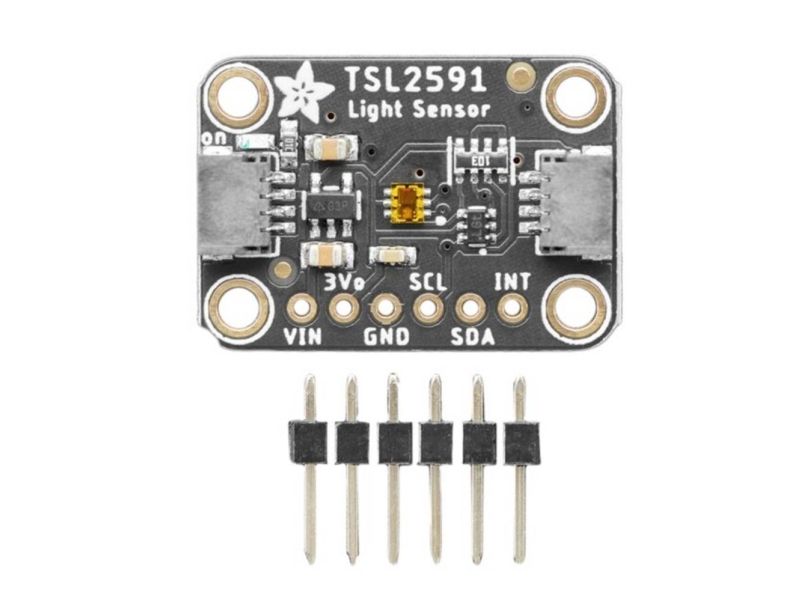
When the future is dazzlingly-bright, this ultra-high-range luminosity sensor will help you measure it. The TSL2591 luminosity sensor is an advanced digital light sensor, ideal for use in a wide range of light situations. Compared to low cost CdS cells, this sensor is more precise, allowing for exact lux calculations and can be configured for different gain/timing ranges to detect light ranges from 188 uLux up to 88,000 Lux on the fly.
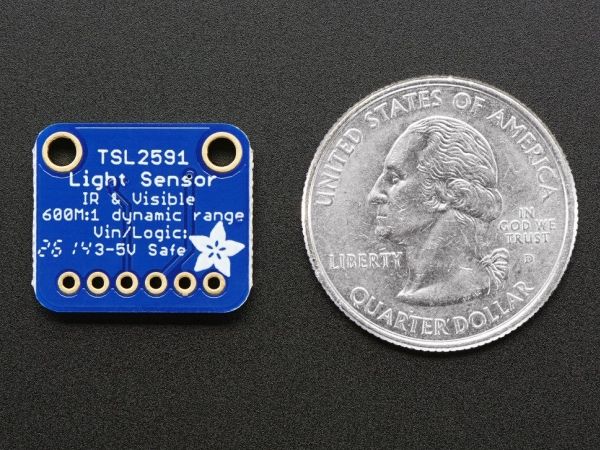
The best part of this sensor is that it contains both infrared and full spectrum diodes! That means you can separately measure infrared, full-spectrum or human-visible light. Most sensors can only detect one or the other, which does not accurately represent what human eyes see (since we cannot perceive the IR light that is detected by most photo diodes) This sensor is much like the TSL2561 but with a wider range (and the interface code is different). This sensor has a massive 600,000,000:1 dynamic range! Unlike the TSL2561 you cannot change the I2C address, so keep that in mind.
The built in ADC means you can use this with any microcontroller, even if it doesn't have analog inputs. The current draw is extremely low, so its great for low power data-logging systems. about 0.4mA when actively sensing, and less than 5 uA when in power-down mode.
Product type
Light sensor
Brand compatibility
Adafruit
Ambient light sensor
Yes
Compliance certificates
RoHS
Width
19 mm
Depth
16 mm
Height
1 mm
Weight
1.1 g
The item is known under the following item numbers in our system
EAN:
2050004691092
SKU:
ADA-1980
Why do I find that the same product is available on different item numbers?
Manufacturers often release the same product with different item numbers, typically just different versions of the packaging. For example, the packaging may be targeted at different countries.
We try our best to unify the products, but it can happen that the same product appears on different item numbers in our system.