The item is in a remote warehouse, delivery time is 5-7 business days. More info
Delivery options - Select at checkout
Shipping @price - GLS
12,00
EUR
146,50
Incl. VAT 183,13
Total incl. delivery
198,13
The function requires that you are logged in. Create a user and use our smart list system to keep track of future purchases, regular purchases or wish lists. Create user Login

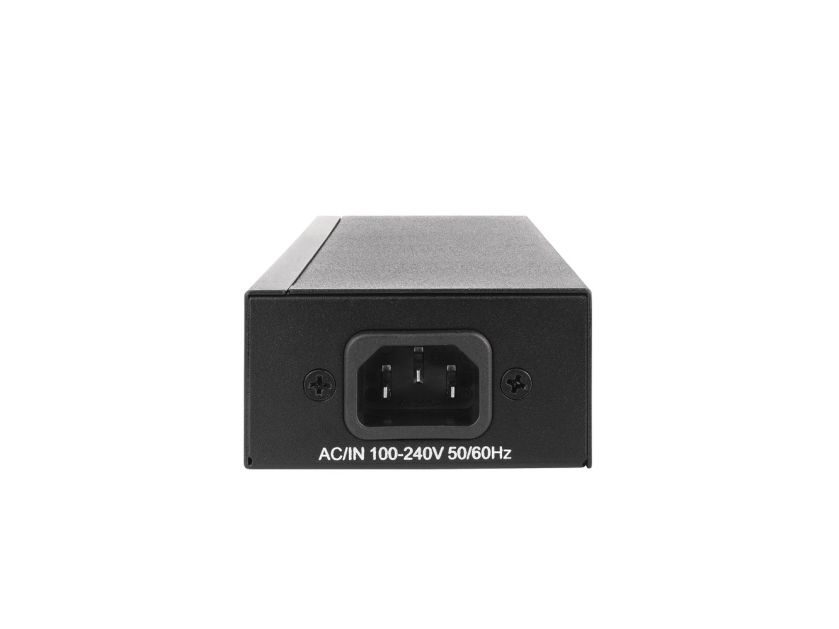
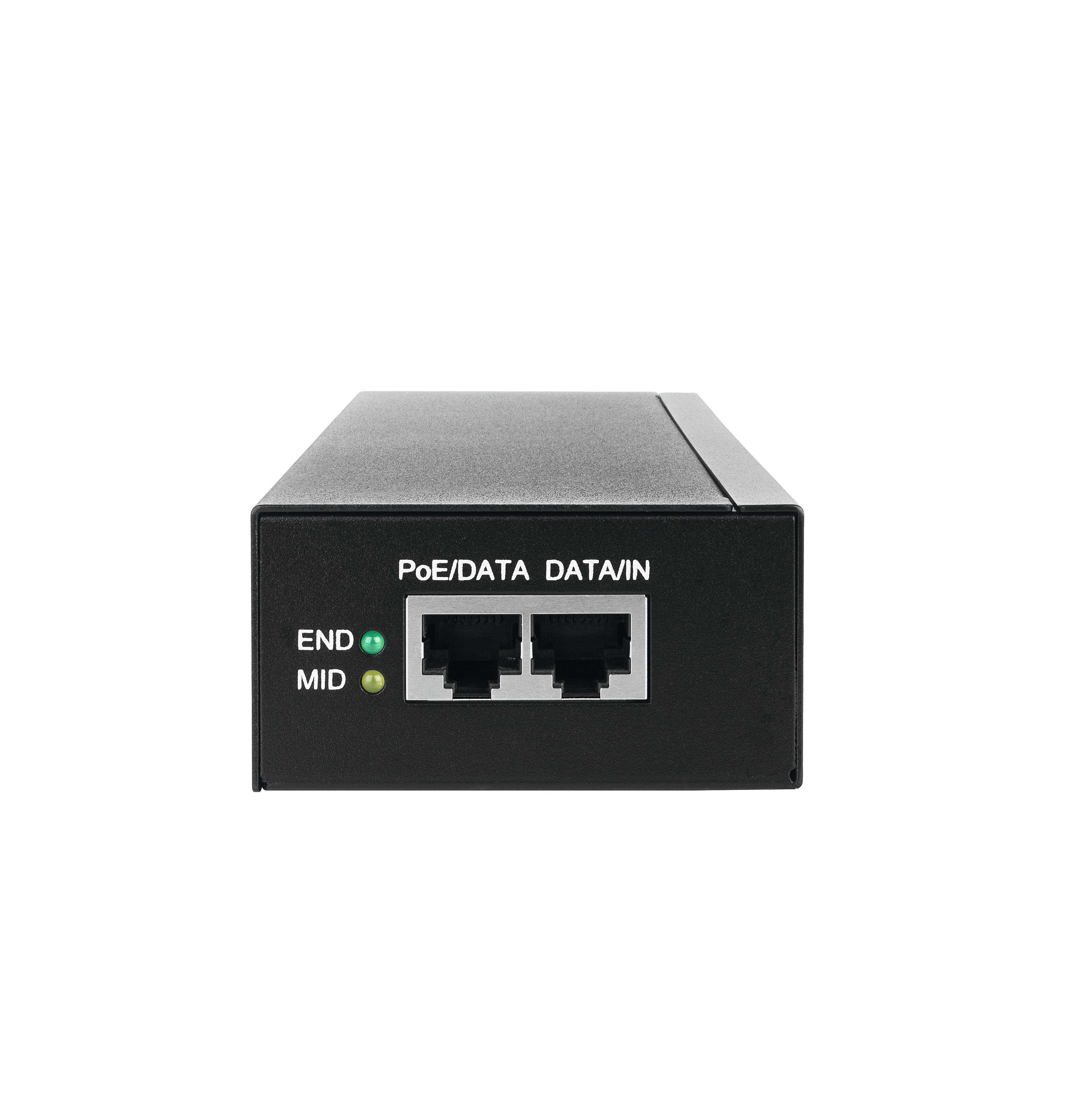
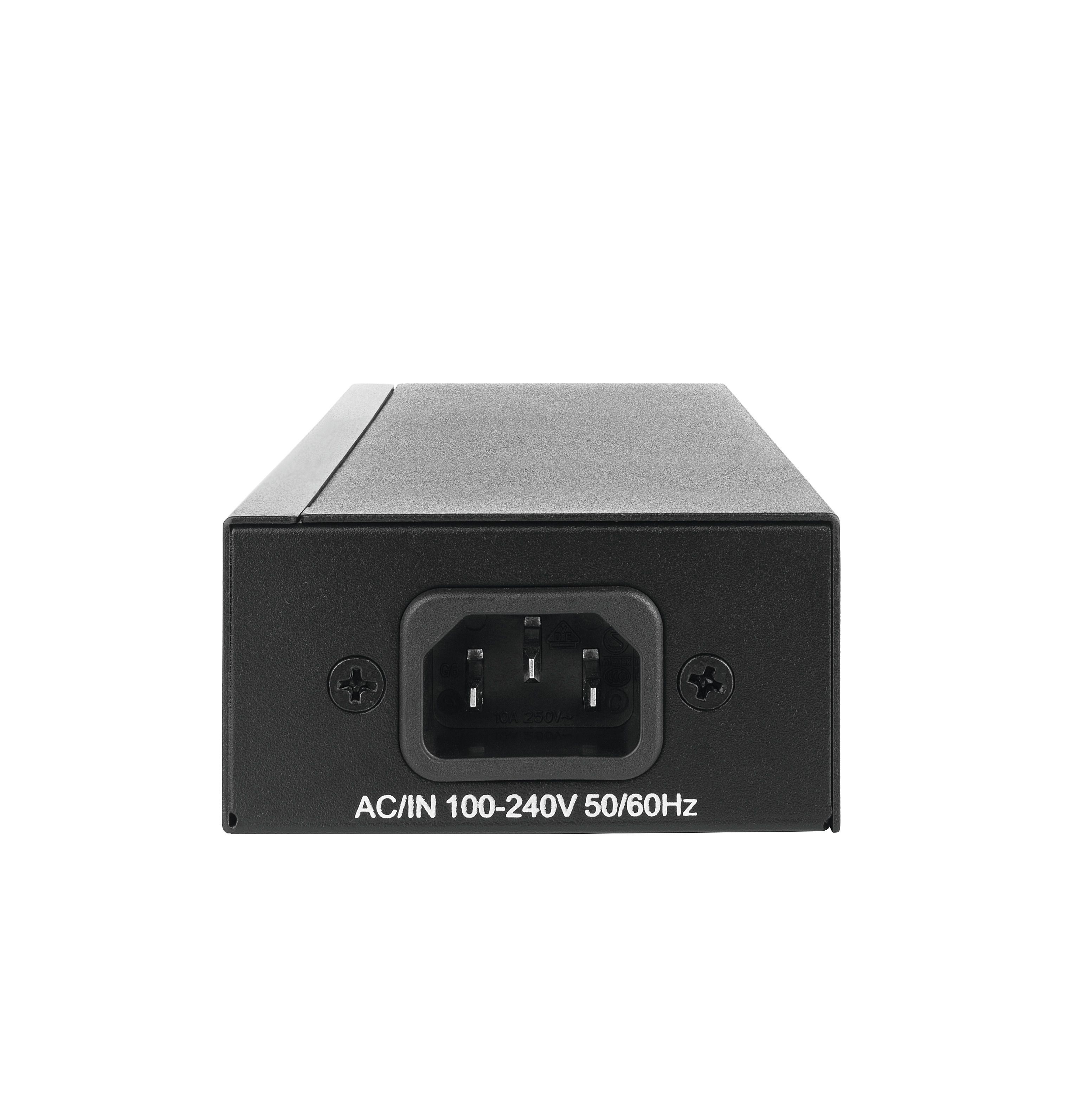
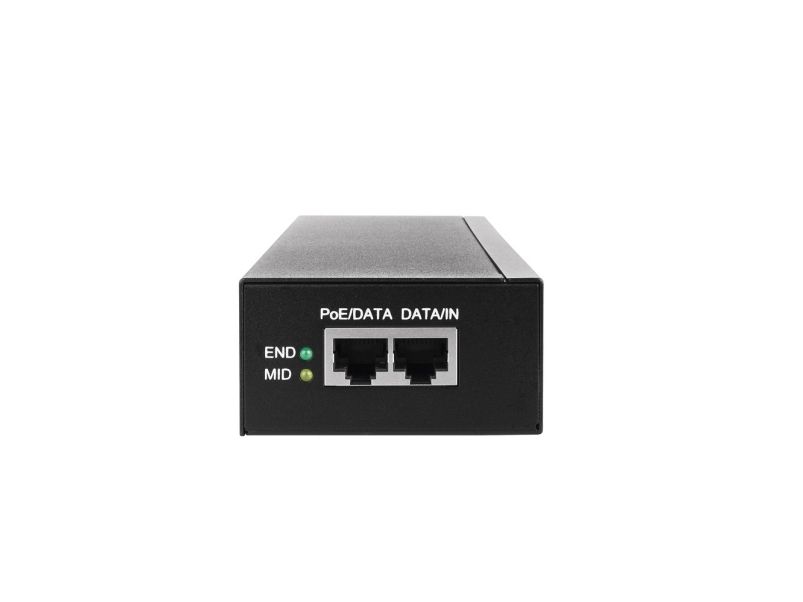
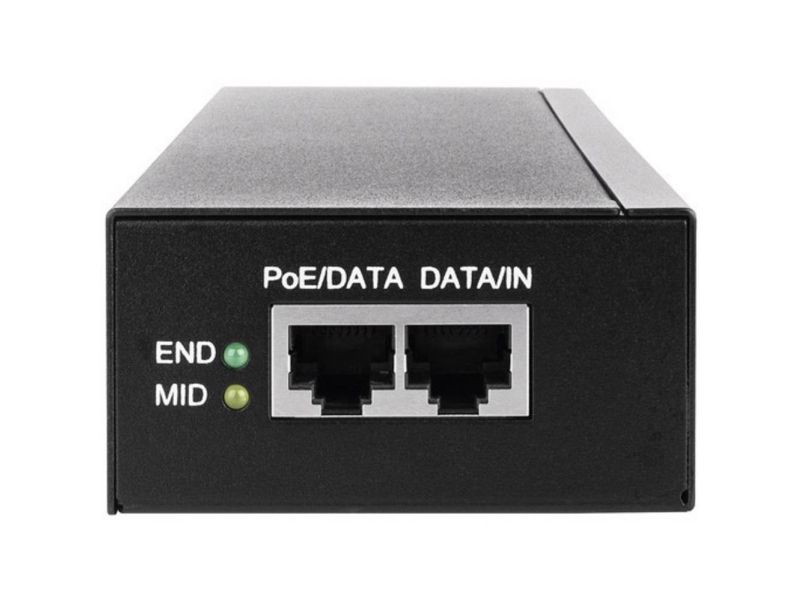
Minimise your cabling work by installing IP cameras that work with the High PoE standard (60 Watts). With the help of the High PoE injector, you can operate this kind of camera via PoE even if your network components (switches etc.) do not support High PoE, PoE+ or PoE.
With the injector, the power supplied to the IP cameras that work with High PoE is fed via an Ethernet cable. The power is then supplied via the same network cable used to transfer the camera to the network – even if the available network components are not PoE-compatible and/or do not provide sufficient power for High PoE (60 Watts).
The advantage: There is no need to lay an extra power cable and the camera can be operated without a separate power supply unit. This means you no longer need to select a camera location with a local power supply (socket etc.) There is only a network cable running from the camera to the injector (max. cable length 100m) and the injector is connected to the network and the power cable on the other side.
The High PoE injector is compatible with the IPCS82520 camera model which requires High PoE (60 Watts) for its power supply.
Networking standards
IEEE 802.3af, IEEE 802.3at, IEEE 802.3bt
Product colour
Black
Maximum operating distance
100 m
LED indicators
Yes
Ethernet LAN (RJ-45) ports
2
DC-in jack
No
Output power
60 W
AC adapter input voltage
100 - 240 V
Input frequency
50 / 60 Hz
Dimensions (WxDxH)
70 x 180 x 36 mm
The item is known under the following item numbers in our system
EAN:
4043158067194
SKU:
TVAC25005
Why do I find that the same product is available on different item numbers?
Manufacturers often release the same product with different item numbers, typically just different versions of the packaging. For example, the packaging may be targeted at different countries.
We try our best to unify the products, but it can happen that the same product appears on different item numbers in our system.