The item is in a remote warehouse, delivery time is 1-2 business days. More info
Delivery options - Select at checkout
Shipping @price - GLS
12,00
EUR
75,23
Incl. VAT 94,04
Total incl. delivery
109,04
The function requires that you are logged in. Create a user and use our smart list system to keep track of future purchases, regular purchases or wish lists. Create user Login
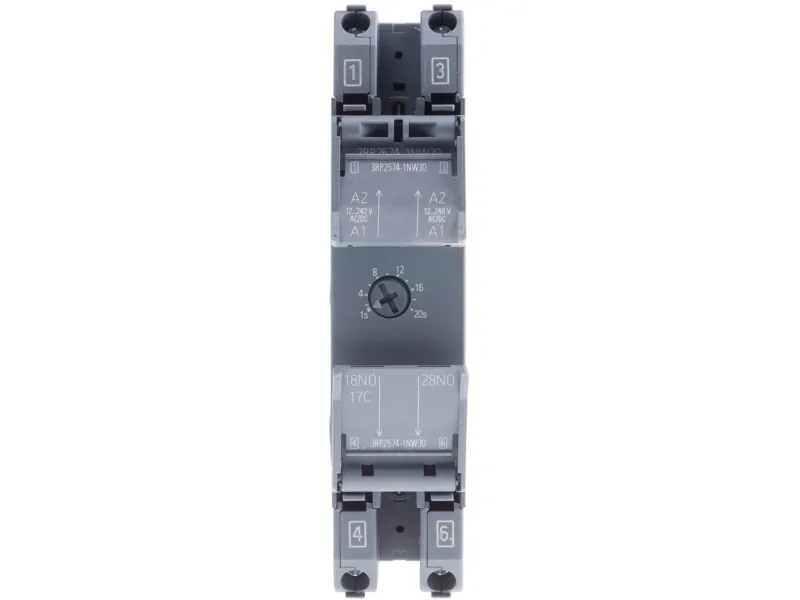
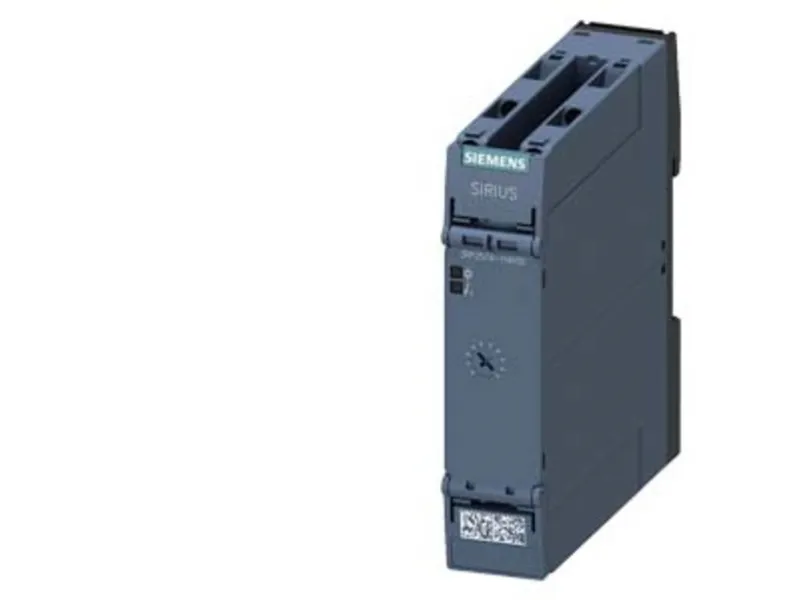
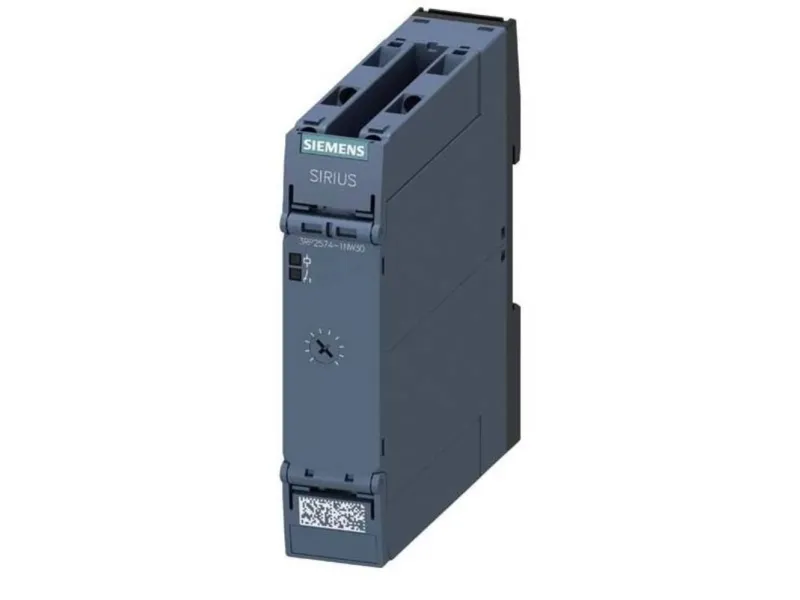
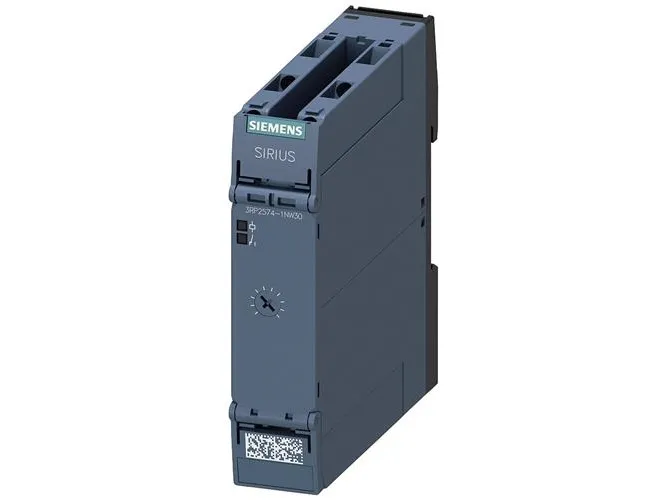
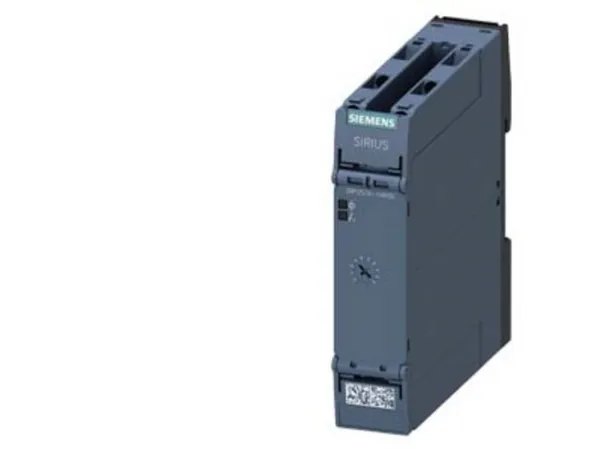
Siemens DIN Rail Single Function Timer Relay, 1 to 20s Delay, 12 to 240V AC/DC Supply - 3RP25 Series - 3RP2574-1NW30 Achieve precise timing control over your electrical system with this timer relay from Siemens. When energised, its DPST (double pole single throw) setup lets it swap the current flow between two circuits after the predefined time. The unit features star-delta functionality, meaning that it activates a lower-voltage circuit before swapping to full voltage. This limits the inrush current through the circuit to less than 5A and makes the relay ideal for safely starting large electric motors. A 50ms changeover time between the unit's star and delta circuits minimises the risk of shorting to prevent harm to your operators and equipment. - Wide programmable delay range between 1 and 20 seconds can be tailored to suit various systems - Switches voltages between 12 and 240V, making it a safe way to achieve precise timing control - Works with both 50 and 60Hz voltage frequencies to easily conform to applications with converted power supplies What's an inrush current? Inrush current refers to the current pulled by a motor-based appliance when initially activated. It's typically much higher than the normal operating current of the appliance.
Package width
36 mm
Package depth
109 mm
Package height
126 mm
Package weight
151 g
Compliance certificates
CE, RoHS, REACH
Timer duration (minimum)
1 s
Timer duration (maximum)
20 s
Actuating voltage type
AC/DC
Electrical connection type
Screw connection
Rated control supply voltage (DC)
12 - 240 V
Rated control supply voltage (AC 50Hz)
12 - 240 V
Rated control supply voltage (AC 60Hz)
12 - 240 V
Pluggable on auxiliary contact block
No
Semiconductor output
No
Function star-delta
Yes
Number of outputs (delayed, change-over contact)
0
Function floating contact on energization
No
Function delay on de-energization
No
Function floating contact on de-energization
No
Number of outputs (undelayed, normally open contact)
1
Function pulse shaping
No
Number of outputs (undelayed, normally closed contact)
0
Number of outputs (delayed, normally closed contact)
0
Number of outputs (undelayed, change-over contact)
0
Number of outputs (delayed, normally open contact)
1
Remote operation possible
No
Suitable as remote control
No
Function flashing (starting with pause, fixed time)
No
Function flashing (starting with pulse, fixed time)
No
Clock function (starting with pause, variable)
No
Clock function (starting with pulse, variable)
No
Outputs (reversible delayed/undelayed)
No
The item is known under the following item numbers in our system
EAN:
4011209943858
SKU:
SIE-10482928
ELnr:
7823200925
Why do I find that the same product is available on different item numbers?
Manufacturers often release the same product with different item numbers, typically just different versions of the packaging. For example, the packaging may be targeted at different countries.
We try our best to unify the products, but it can happen that the same product appears on different item numbers in our system.