The item is in a remote warehouse, delivery time is 3-5 business days. More info
Delivery options - Select at checkout
Shipping @price - GLS
12,00
EUR
4,75
Incl. VAT 5,94
Total incl. delivery
20,94
The function requires that you are logged in. Create a user and use our smart list system to keep track of future purchases, regular purchases or wish lists. Create user Login
Future-oriented standards and high-end quality for your network.
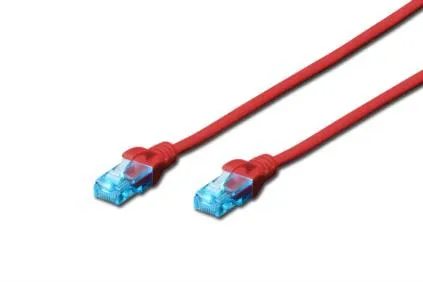
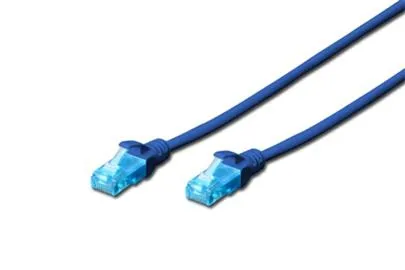
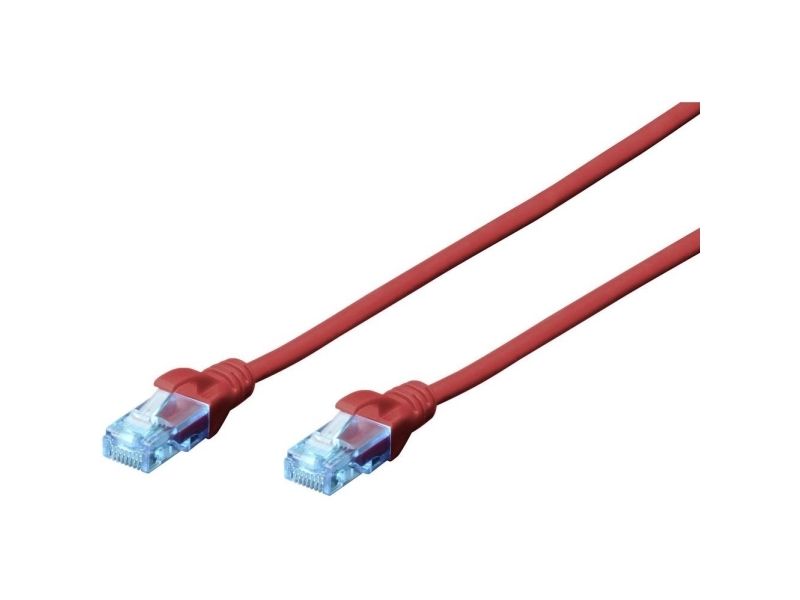
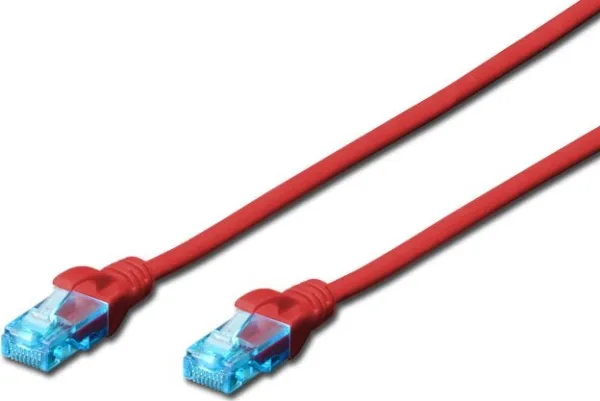
- Transparent blue colored plug for easy identification of Category 5e (100 MHz)
The DIGITUS® Category 5e Class D patch cords are manufactured and tested to the ISO/IEC 11801 and DIN EN 50173 Category 5e specifications. They will guarantee the installed cabling system is compliant with the ISO & EN channel specification requirements and will provide optimum performance levels of DIGITUS® Category 5e cabling. The performance is tested up to 100 MHz inclusive performance characteristics such as near end cross talk (“NEXT”). DIGITUS® patch cords are designed and produced to fulfill the highest requirements of various application areas in full volume. Each cable is fitted with a molded boot which comes with kink protection and strain relief. Furthermore the boot is equipped with a latch protection that prevents the latching lever against breaking.You can easily identify the Category 5e, because of the transparent blue colored connector.
Produktbeskrivelse
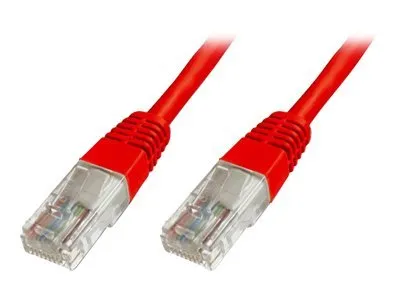
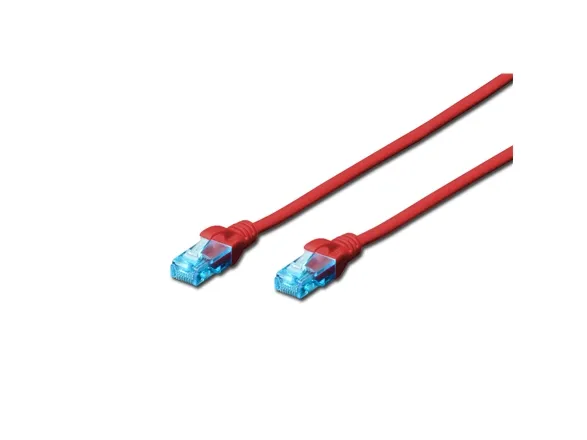
DIGITUS Ecoline patchkabel - 50 cm - rød
Type
Patchkabel - CAT 5e
Teknologi
Ikke afskærmet parsnoet (UTP)
Egenskaber
Booted
Kabel længde
50 cm
Forbindelsesled
RJ-45 - han
Stikforbindelse (anden ende)
RJ-45 - han
Farve
Rød
Generelt
Netværkskabeltype
Patchkabel - CAT 5e
Teknologi
Ikke afskærmet parsnoet (UTP)
AWG American Wire Gauge
26/7
Impedans
100 ohm
Egenskaber
Booted
Kabel længde
50 cm
Farve
Rød
Forbindelse
Forbindelsesled
RJ-45 - han
Stikforbindelse (anden ende)
RJ-45 - han
The item is known under the following item numbers in our system
EAN:
4016032198901
Why do I find that the same product is available on different item numbers?
Manufacturers often release the same product with different item numbers, typically just different versions of the packaging. For example, the packaging may be targeted at different countries.
We try our best to unify the products, but it can happen that the same product appears on different item numbers in our system.